The Ultimate Guide to Short Term Study Abroad Programs
In today’s globalized economy, acquiring international experience is no longer just a luxury—it is an essential asset for personal growth and career progression. However, committing to a full semester or a multi-year degree in a foreign country can be intimidating, expensive, and difficult to fit into a rigid academic schedule. This is precisely why short term study abroad programs have seen a massive surge in popularity among high schoolers, college students, and working professionals alike.
A short-term international academic experience allows you to dip your toes into global education, soak in rich cultural traditions, expand your professional network, and earn academic credits without hitting pause on your life back home. Whether you are a STEM major with a packed course load or a working adult looking to upskill over summer break, these condensed programs offer an accessible, high-impact alternative to traditional semester-long study abroad options.
In this comprehensive guide, we will break down everything you need to know about navigating short term study abroad programs. You will learn about the different program types, key benefits, cost structures, and practical steps to select the ideal journey for your academic and personal goals.
What Are Short Term Study Abroad Programs?
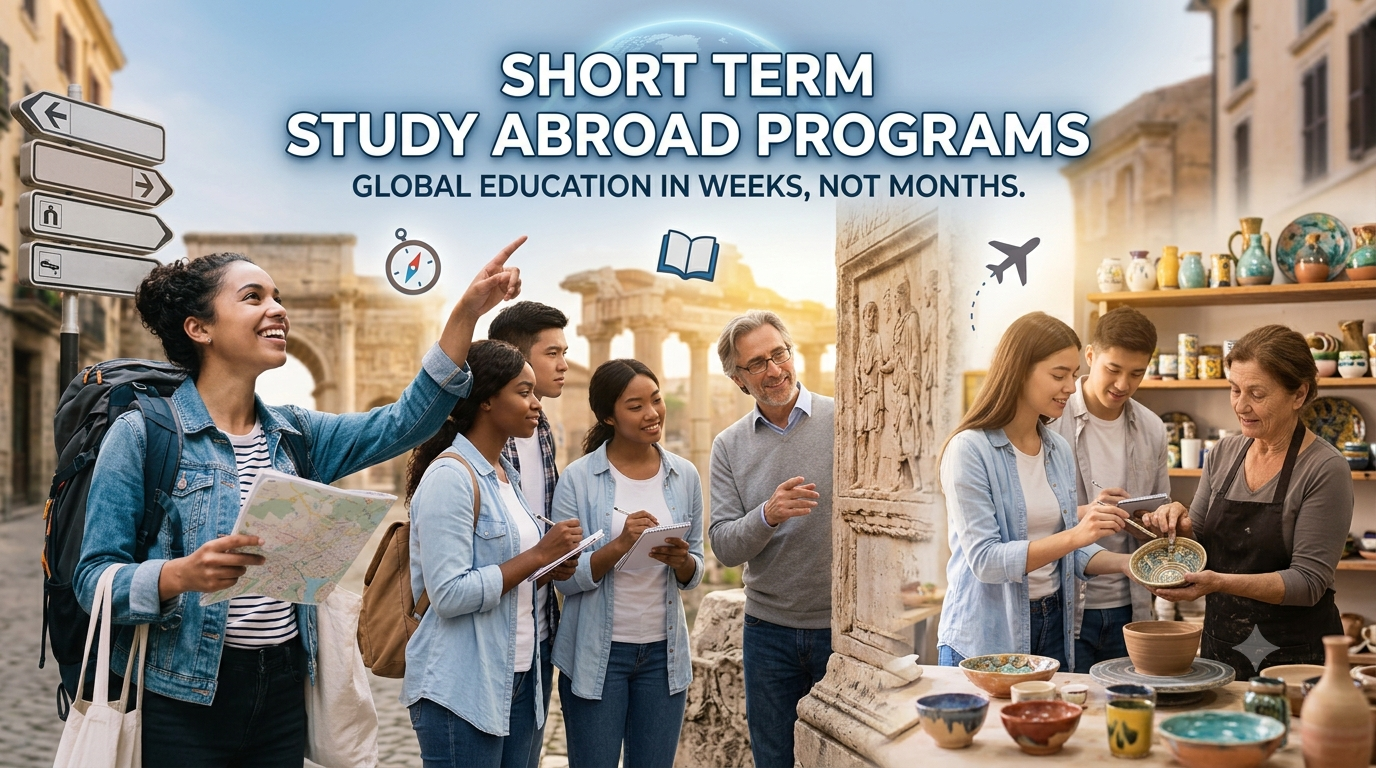
Short term study abroad programs are structured educational experiences hosted in a foreign country that typically range in duration from one week to eight weeks. Unlike classic semester or year-long exchange initiatives, these intensive sessions are designed to pack focused coursework, cultural immersion, and field-based learning into a shorter timeframe.

These opportunities usually run during standard academic breaks—such as summer vacation, winter J-term, or spring break. During this time, participants take one or two focused courses, engage in hands-on workshops, conduct field research, or intern at an international organization. Because the curriculum is highly concentrated, students can cover an entire semester’s worth of specialized material in a few intense weeks.
Common Durations and Formats
To help you understand how these learning trips are structured, here is a quick overview of typical formats:
- Maymester / J-Term (2–4 Weeks): Conducted during winter or spring breaks, focusing on a single, highly specialized subject.
- Summer Sessions (4–8 Weeks): Held between academic years, offering room for multiple courses or field internships.
- Faculty-Led Field Trips (1–3 Weeks): Guided directly by professors from your home institution, integrating classroom teaching with on-site historical or scientific tours.
Key Benefits of Short Term Study Abroad Programs
Choosing a abbreviated international experience offers a unique set of advantages that appeal directly to modern, goal-oriented learners.
                      ┌───────────────────────────────────────┐
                      │ Key Benefits of Short-Term Programs   │
                      └───────────────────┬───────────────────┘
                                          │
         ┌──────────────────┬─────────────┴────────────┬──────────────────┐
         ▼                  ▼                          ▼                  ▼
┌─────────────────┐ ┌───────────────┐        ┌──────────────────┐ ┌───────────────┐
│ Cost-Effective  │ │ Schedule Flex │        │ Career Boost     │ │ Cultural      │
│ & Affordable    │ │ & No Delays   │        │ & Soft Skills    │ │ Immersion     │
└─────────────────┘ └───────────────┘        └──────────────────┘ └───────────────┘
1. High Affordability and Lower Financial Stress
Financial constraints are often the single biggest barrier to studying in another country. Because short term study abroad programs cut down housing, living, and tuition costs dramatically compared to a full year away, they are significantly more budget-friendly. Additionally, many institutions and organizations offer dedicated micro-grants and scholarships specifically reserved for short-duration global travel.
2. Academic Schedule Flexibility
Many college majors—particularly in medicine, engineering, technology, and nursing—have strict sequential course sequences. Taking a full semester off can delay your graduation date. Short-term trips fit neatly into official school breaks, ensuring you earn critical elective or core credits without falling behind on your home campus degree timeline.

3. Accelerated Skill Building and Resume Enhancement
Employers heavily value cross-cultural communication, adaptability, and problem-solving skills. Completing an intensive course in an unfamiliar environment shows recruiters that you possess initiative, resilience, and a global mindset. In fact, dynamic international internships squeezed into a summer break can give your resume an immediate competitive edge in the job market.
4. A Gentle Introduction to Global Travel
If you have never traveled abroad on your own before, the prospect of living in a foreign country for six months can feel overwhelming. A condensed two-to-four-week program acts as an ideal trial run. It lets you test your independence, build travel confidence, and learn cultural navigation in a structured environment with structured support systems.
Types of Short Term Study Abroad Programs
Not all international courses are structured the same way. Selecting the right path depends on your academic goals, budget, and personal interests.
Direct University Exchange & Faculty-Led Programs
In a faculty-led model, a professor from your home university designs an international curriculum and leads a small group of students abroad. These programs are exceptionally easy for credit transfers because the course is directly managed by your university. Alternatively, direct exchange allows you to temporarily enroll in a partner university abroad for a summer session alongside local students.
Third-Party Provider Programs
Organizations such as CIEE, AIFS, and IFSA specialize in building comprehensive travel packages for students. These third-party providers take care of tuition, housing arrangements, visa assistance, health insurance, and organized weekend excursions. While they can be slightly more expensive, the high level of staff support makes them extremely popular for first-time travelers.
Language Immersion & Global Internships
If your main priority is language acquisition or professional exposure, targeted short-term programs are ideal. Specialized language academies offer intensive multi-week programs designed to accelerate fluency through total daily immersion.

Meanwhile, global short-term summer internships match you with international companies, startups, or non-profit organizations to gain hands-on, practical field experience.
Comparing Short-Term vs. Long-Term Study Abroad Options
To help you decide whether a condensed experience is right for you, let us compare the primary differences between short-term and full-semester programs:
| Key Feature | Short Term Study Abroad Programs | Semester / Full Year Programs |
| Duration | 1 to 8 weeks | 4 to 10 months |
| Typical Cost | $1,500 – $6,000 USD (Lower overall expenditure) | $12,000 – $35,000+ USD |
| Academic Impact | Fits within breaks; zero graduation delay | Requires major schedule adjustments |
| Pacing | Fast-paced, immersive, and intense | Gradual, structured, and routine-based |
| Accommodation | Hostels, dorms, or short host family stays | Student apartments or residential halls |
| Best For | STEM majors, athletes, working adults, first-timers | Students seeking complete cultural assimilation |
How to Choose the Right Program for Your Goals
With hundreds of short term study abroad programs available worldwide, narrowing down your choices requires a clear evaluation framework.
       1. Academic Alignment  ──► Ensure credits transfer to your degree
       2. Budgeting           ──► Factor tuition, airfare, & daily expenses
       3. Support Systems     ──► Look for 24/7 on-site emergency assistance
       4. Cultural Activities ──► Check for included field trips & tours
1. Check Course Alignment and Credit Transferability
Before signing up or paying any deposit, talk directly with your academic advisor. Verify whether the short-term credits will fulfill your major requirements, count toward a minor, or satisfy general education electives. Always secure pre-approval for credit transfers in writing.
2. Evaluate Total Costs Beyond Tuition
While tuition for a short-term course is lower, you must account for all hidden expenses. Calculate roundtrip airfare, passport and visa fees, daily meals, local transportation, emergency medical insurance, and discretionary spending money.
3. Review Safety Standards and On-Site Support
Ensure that your chosen provider or university offers robust emergency response networks, English-speaking staff on the ground, and clear safety protocols. Having strong local support gives both you and your family peace of mind during your time abroad.
Step-by-Step Guide to Applying for a Short-Term Program
Applying for international study requires structured planning. Follow these sequential steps to ensure a smooth preparation process:
1.Research Options & Meet Advisors:
Browse available university-led and third-party short term study abroad programs. Schedule an appointment with your university’s study abroad office and your academic advisor to clear credit transfers.
2.Prepare Documentation & Apply for Funding:
Gather your academic transcripts, write a compelling personal statement, and request recommendation letters if required. Simultaneously apply for institutional scholarships, diversity grants, or travel bursaries.
3.Submit Applications & Secure Your Travel Visa:
Submit your formal application before the program deadline. Once accepted, check destination entry requirements and apply for a entry visa or travel authorization if needed.
4.Pre-Departure Orientation & Travel Prep:
Attend pre-departure health and safety briefings. Book flights, secure international travel insurance, notify your bank of foreign travel, and pack according to local weather conditions.
Frequently Asked Questions
1. Can high school students participate in short term study abroad programs?
Yes, many institutions and specialized organizations offer pre-college short-term programs specifically tailored for high school juniors and seniors. These programs focus on foreign language learning, leadership development, or introductory university coursework.
2. Are short-term international credits recognized by all home universities?
Credit transfer depends entirely on your home university’s policies. If you participate in a faculty-led program, credits are usually automatic. For third-party programs, you must obtain course pre-approval from your registrar’s office prior to departure.
3. Will I need a student visa for a 3-week study abroad program?
In many cases, no. Programs lasting under 90 days often allow travelers to enter on a standard tourist visa or visa waiver (such as ETIAS or ESTA), depending on your citizenship and destination. However, you should always check destination-specific immigration rules.
4. Can graduate students take part in short-term study abroad options?
Grad students frequently participate in specialized, short-term research trips, global executive MBA modules, and international fieldwork programs designed to fit into demanding professional schedules.
5. What happens if I encounter a language barrier during a short-term trip?
Most short-term programs designed for international students conduct core classes in English while offering optional, introductory language instruction. On-site coordinators and translation apps also make daily navigation simple.
6. Can I work or take up a part-time job while on a short-term program?
Generally, no. Most short-term visas and visitor permissions strictly prohibit local employment. Additionally, the fast-paced nature of short academic sessions leaves little room for outside work commitments.
7. How does travel insurance work for short-term international studies?
Most program providers and university study abroad offices mandate comprehensive international health and travel insurance. This insurance covers emergency medical care, trip cancellations, lost luggage, and emergency evacuation.
8. Are there age limits for short term study abroad programs?
While university-based programs primarily target undergraduate and graduate students aged 18–25, many independent language schools and adult education providers offer short-term educational travel with no upper age limit.
9. How do housing arrangements work for short-term trips?
Housing options vary by program type and location. Common accommodations include university dormitories, boutique hotels, shared student apartments, or local host families (homestays) for deeper cultural immersion.
10. Can I extend my stay to travel independently after the program ends?
In most cases, yes! As long as your visa permits and your flight booking is flexible, you can travel independently before or after your official coursework concludes. Just be sure to notify your program directors of your personal travel plans.
Conclusion
Short term study abroad programs offer an ideal balance between academic achievement, cultural discovery, and personal flexibility. By condensing high-value learning into a few weeks, these programs make international education accessible to students who might otherwise be constrained by tight budgets, strict degree requirements, or busy personal schedules.
also read: https://cherishsstudy.com/cheap-study-abroad-programs/
Whether you choose to study art history in Italy over winter break, conduct marine biology research in Costa Rica during May, or intern at an innovative tech firm in Tokyo over the summer, the cross-cultural insights and independence you gain will last a lifetime. Plan ahead, consult with your advisors, pick a program that matches your goals, and get ready for a transformative global journey!