Study Abroad Programs for High Schoolers: The Ultimate Guide to Global Learning Opportunities
Stepping out of the conventional classroom setting to explore foreign cultures is no longer reserved exclusively for college students. High school students across the world are discovering the incredible advantages of global education early on. Engaging in study abroad programs for high schoolers allows young learners to expand their academic horizons, develop fluency in new languages, and build lifelong independence before they even set foot on a university campus.

Navigating the ocean of international education opportunities can feel overwhelming for teens and parents alike. From short-term summer language immersions to full-year exchange trips, discovering the right pathway requires understanding options, costs, admissions value, and practical logistics. This comprehensive guide walks you through everything you need to know about international study for teens.
What Are Study Abroad Programs for High Schoolers?
At their core, study abroad programs for high schoolers are structured educational trips designed for teenagers—typically between the ages of 14 and 18. These initiatives allow students to live, learn, and engage in civic or academic activities in a foreign country. Unlike tourist vacations, study abroad experiences combine structured academic coursework, language acquisition, cultural immersion, or community service into a single cohesive journey.

Participants may attend local public secondary schools alongside host-country peers, enroll in specialized language academies, live in international boarding schools, or participate in field-based research programs. Supported by dedicated program staff and host families, teens gain an authentic look into daily life in another part of the world while remaining safe and academically on track.
Key Benefits of International Education in High School
+-----------------------------------------------------------------------+
|                   BENEFITS OF STUDYING ABROAD EARLY                   |
+-----------------------------------------------------------------------+
|  1. Language Fluency      ---> Daily conversational immersion          |
|  2. College Edge          ---> "Tier 1" distinction on applications   |
|  3. Global Adaptability   ---> Problem-solving in new environments    |
|  4. Personal Growth       ---> Independence, maturity, and self-worth|
+-----------------------------------------------------------------------+
Embarking on an international education program during high school delivers transformative growth that resonates throughout a student’s personal and professional life.

Accelerated Language Acquisition
Traditional classroom language instruction can take years to yield conversational confidence. In contrast, language immersion programs place students directly into environments where they speak, read, and think in a foreign language daily. Surrounded by native speakers at school, home, and market stalls, high schoolers rapidly achieve natural fluency and authentic accent comprehension far faster than textbook study alone permits.
Standout College Applications
Admissions offices at competitive universities look for applicants who demonstrate independence, resilience, and global perspectives. Completing long-term study abroad programs for high schoolers signals to admissions officers that a student can thrive outside their comfort zone, manage diverse cultural dynamics, and handle real-world responsibilities with maturity.
Developing Emotional Maturity and Independence
Leaving family routines behind teaches teenagers essential life skills long before they move into college dorms. Navigating public transit in a foreign city, managing a personal budget, navigating dietary differences, and resolving minor miscommunications foster self-reliance and emotional confidence.
Types of Study Abroad Programs Available for Teens
Not all international programs share the same structure or goals. Depending on your academic ambitions, schedule, and personal interests, several distinct program formats exist:
1. High School Semester and Academic Year Exchanges
Long-term exchange programs allow teens to live abroad for five to ten months. Students enroll directly in a local high school, follow the national curriculum, and live with a vetted host family. This format provides deep cultural integration and maximum language acquisition.
2. Summer Immersion and Academic Camps
For teens unable to take a full term away from their home high school, summer programs spanning two to eight weeks offer the perfect alternative. Options include pre-college summer academic tracks at universities like Oxford or Cambridge, intensive language camps, or specialized creative arts workshops.
3. Service Learning and Environmental Volunteering
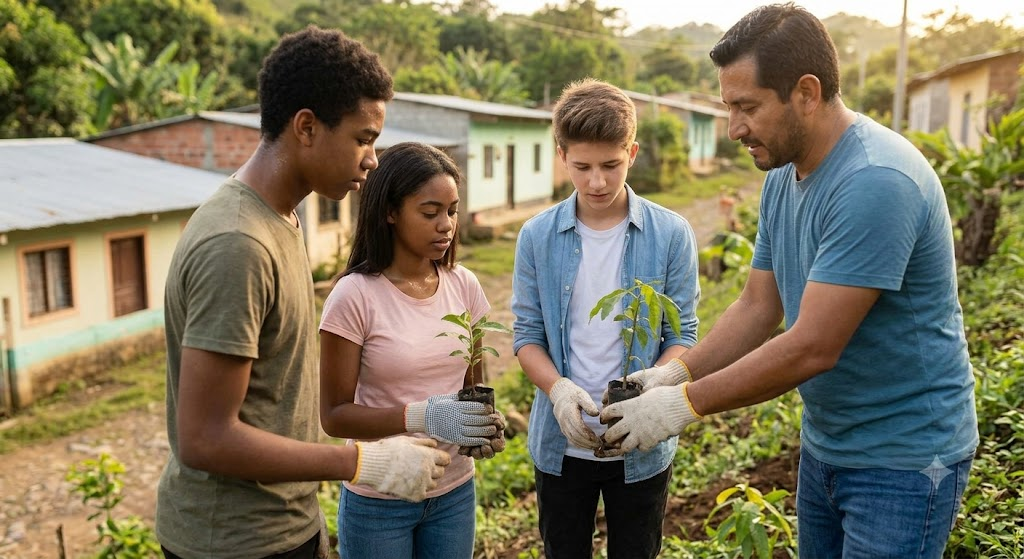
Service-learning programs merge cultural exploration with community initiatives. Students participate in conservation projects, teach English, support sustainable agriculture, or build community infrastructure alongside local leaders in developing destinations across Latin America, Southeast Asia, or Africa.
4. Government-Funded Merit Scholarships
Several government agencies offer competitive, fully funded exchange programs for high school students. These flagship initiatives aim to foster international diplomacy and critical language skills at no cost to selected families.
Popular Destinations and Program Comparison
Different regions cater to distinct educational goals, whether you are prioritizing language learning, historic exploration, or outdoor service work.
| Destination | Primary Focus | Typical Duration | Best For |
| Spain / Costa Rica | Spanish Language & Culture | 2 Weeks to 1 Year | Language Immersion & Eco-Service |
| Germany | Academic Exchange & History | Semester / Academic Year | Full High School Integration |
| Japan / South Korea | Cultural Immersion & STEM | 3 Weeks to 1 Year | Modern Technology & Critical Languages |
| United Kingdom | Pre-University Academic Prep | 2 to 4 Weeks | University Prep & Humanities |
| Thailand / Peru | Volunteering & Conservation | 2 to 6 Weeks | Community Service & Field Research |
How to Choose the Right Study Abroad Program
Selecting the ideal international program requires balancing several key parameters. Parents and students should evaluate these core factors together:
Evaluate Academic Credit Compatibility
Before committing to long-term study abroad programs for high schoolers, consult with your home school’s guidance counselor. Ensure that credit earned in foreign institutions—such as math, history, or science coursework—transfers smoothly toward your high school graduation requirements.
Consider Health, Safety, and On-Ground Support
Safety is paramount when sending a minor overseas. Opt for well-established providers that offer 24/7 emergency response networks, dedicated regional coordinators, comprehensive medical insurance coverage, and thorough host-family background checks.
Financial Planning and Scholarships
Program fees vary widely depending on length, location, and inclusions. While short summer trips or private exchanges range from $2,000 to $15,000+, fully funded government merit scholarships—such as CBYX, NSLI-Y, and YES Abroad—cover travel, tuition, and housing completely for qualifying students.
Frequently Asked Questions
1. What is the ideal age for a high schooler to study abroad?
Most programs accept students aged 14 to 18. Sophomore and junior years (ages 15–17) are often considered ideal because students possess sufficient maturity while avoiding the complex university application deadlines typical of senior year.
2. Do students need prior knowledge of a foreign language before enrolling?
In most cases, no. Many exchange organizations and government-funded language programs welcome complete beginners, pairing them with intensive immersion training and supportive host families.
3. Will studying abroad during high school delay graduation?
Not if planned correctly. By coordinating with home school administrators beforehand to confirm course equivalencies, most students stay on track and graduate on time with their peers.
4. How are host families selected and vetted for safety?
Reputable study abroad organizations conduct rigorous multi-step screening processes. This includes in-person home inspections, background checks, character references, and personal interviews to ensure a safe, welcoming home environment.
5. Can high school students earn college credits while studying abroad?
Yes. Certain summer pre-college options and university-affiliated high school programs allow participants to earn transferable undergraduate credits alongside high school certifications.
6. What happens if a student experiences severe homesickness?
Program providers employ local coordinators who are trained to assist teenagers through cultural adjustments. Regular check-ins, peer mentoring, and structured activities help students push through initial homesickness and adapt.
7. How far in advance should we apply for high school study abroad programs?
It is best to start researching options 9 to 12 months before the intended departure date. Merit-based scholarship programs often have strict application deadlines early in the academic year prior to travel.
8. Are there special options for high school student-athletes?
Yes, specialized sports academies and international summer training camps allow high school athletes to maintain training regimes while taking academic coursework abroad.
9. What specialized travel documents do minors need to study abroad?
Minors typically need a valid passport (valid for at least six months past return dates), a student visa (depending on program duration and country), notarized parental consent forms, and international travel health insurance.
10. Can students with dietary restrictions or medical conditions participate?
Absolutely. Most exchange organizations accommodate common dietary needs (vegan, gluten-free, halal, kosher) and manage pre-existing health conditions, provided these details are disclosed during the application process to ensure appropriate host placement.
Conclusion
Participating in study abroad programs for high schoolers offers a unique bridge between high school life and global citizenship. By stepping beyond familiar classrooms, teenagers develop authentic language skills, cultural empathy, and independent problem-solving capabilities that serve them for a lifetime. Whether through a short summer service project or an academic year exchange, investing early in international education opens doors to academic and personal success.
also read: https://cherishsstudy.com/cheap-study-abroad-programs/