The Ultimate Guide to MSU Study Abroad Programs: Opportunities, Costs, and How to Apply
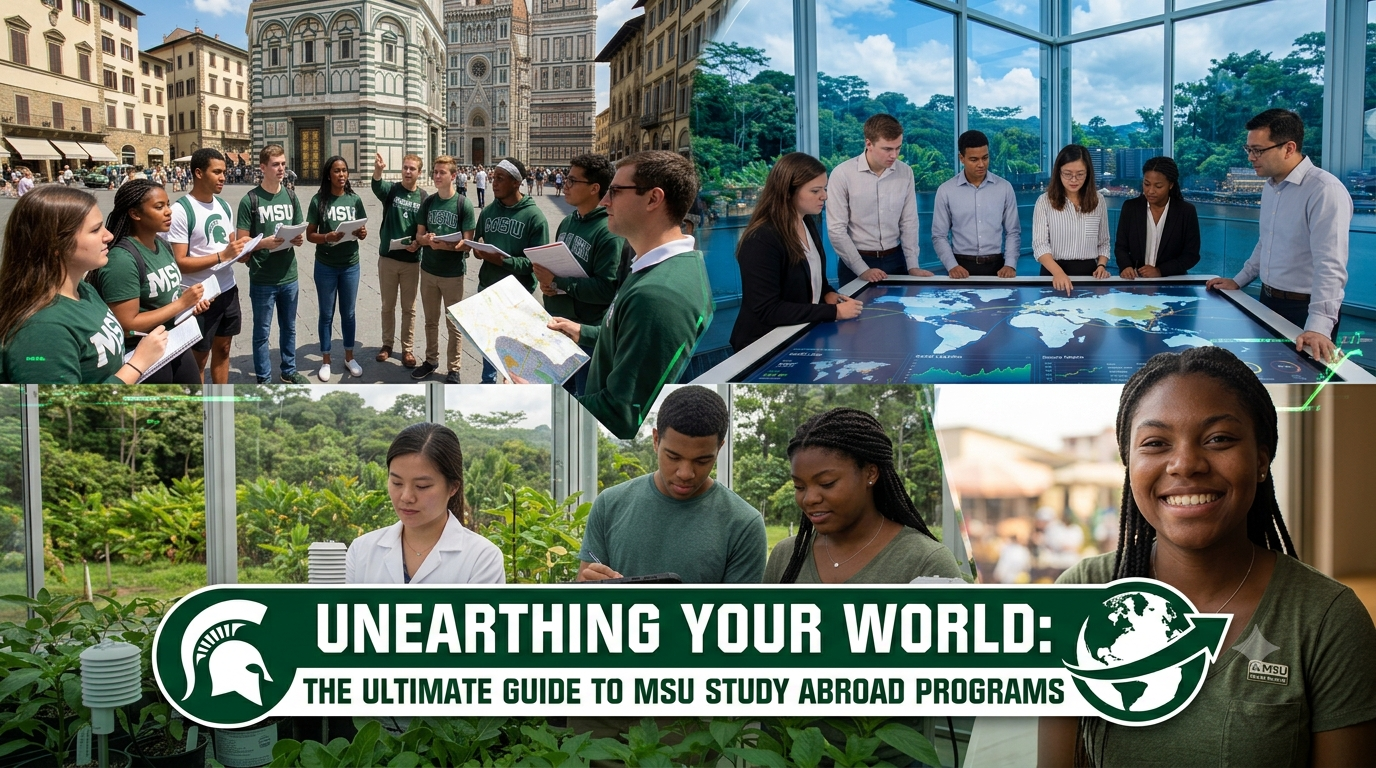
Studying in a foreign country is one of the most transformative experiences a college student can undergo. It expands your global perspective, enhances your resume, and allows you to build lifelong international connections. Michigan State University (MSU) stands out as a national powerhouse in global education. Consistently recognized among the top public research universities for international engagement, Michigan State University offers expansive opportunities through its dedicated Office for Education Abroad.
Whether you are interested in a short two-week seminar over spring break, a summer internship in Europe, or a full academic year exchange, MSU study abroad programs provide tailored pathways for virtually every major and budget. In this comprehensive guide, we will break down everything you need to know about navigating program types, selecting the right destination, managing costs, securing scholarships, and preparing your application.
Why Choose MSU Study Abroad Programs?
Michigan State University administers over 275 credit-bearing programs across more than 60 countries spanning all seven continents—including Antarctica. More than 2,500 Spartans travel overseas each year to gain hands-on academic and professional experience.
Beyond the excitement of exploring new cultures, participating in MSU study abroad programs delivers measurable academic and career advantages:
- Academic Flexibility: Earn direct credit toward your major, minor, or university general education requirements without delaying your graduation timeline.
- Career Readiness: Developing cross-cultural communication, adaptability, and international problem-solving skills makes you significantly more attractive to prospective employers and graduate school admissions boards.
- Diverse Options: With options ranging from intensive one-week courses to multi-semester enrollment, you do not have to disrupt your on-campus commitments to gain global experience.
Exploring the Types of MSU Study Abroad Programs
Not all international experiences are structured the same way. MSU categorizes its offerings into several distinct formats so students can select the structure that best fits their learning style and goals.
1. Faculty-Directed Programs
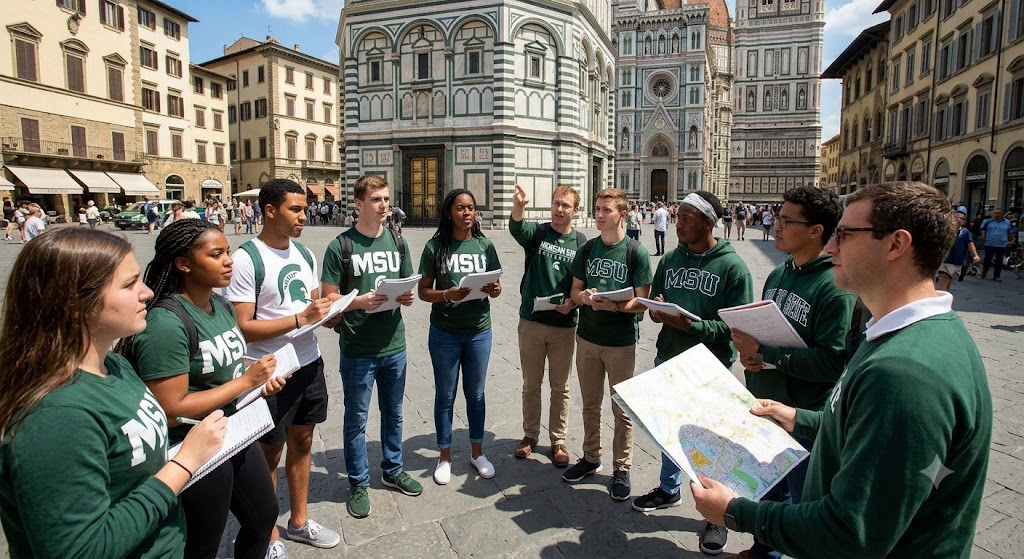
Faculty-directed programs are led by MSU faculty members who accompany students abroad. These programs typically run during summer sessions or university breaks (such as winter or spring break) and last anywhere from 1 to 8 weeks. Courses are designed directly around MSU curricula, making academic credit transfer seamless.
2. Direct Enrollment and Exchange Programs
If you want deep cultural immersion, direct enrollment and exchange programs allow you to enroll as a visiting student at a partner university abroad for a semester or full academic year. You take classes alongside local and international students, live in university dormitories or apartments, and experience daily life in your host country.
3. International Internships and Field Research
For hands-on professional development, MSU offers credit-bearing global internships and research opportunities. Students gain practical workplace experience in fields like international business, public health, engineering, communications, and environmental science.
4. First-Year Seminars Abroad
Uniquely designed for incoming freshmen, First-Year Seminars Abroad take place during the summer between high school graduation and the start of your first semester at MSU. These short-term courses introduce new Spartans to university-level academics while building a close-knit peer network before stepping foot on the East Lansing campus.
Comparing MSU Study Abroad Program Types
To help you decide which structure suits your schedule and academic targets, review the comparison below:

| Program Format | Typical Duration | Primary Focus | Best Suited For |
| Faculty-Directed | 1 to 8 Weeks | Coursework led by MSU faculty | Students seeking guided travel with familiar faculty |
| Direct Exchange | 1 Semester / 1 Year | Full immersion at partner university | Independent students wanting deep cultural integration |
| Global Internships | 6 to 12 Weeks | Professional workplace experience | Undergrads seeking resume-building work experience |
| First-Year Seminars | 1 to 3 Weeks | College transition & exploration | Incoming freshmen looking to build confidence and network |
| Research Abroad | 4 to 12 Weeks | Independent or lab research project | STEM and social science majors preparing for grad school |
Popular Destinations and Disciplines
While MSU offers opportunities around the globe, certain destinations and academic disciplines see high participation due to established institutional partnerships.
Top Academic Fields for Spartans Abroad

- Business & Finance: The Eli Broad College of Business sponsors numerous international programs focused on global supply chain, international finance, and marketing in global hubs like London, Tokyo, and Sydney.
- Biological & Health Sciences: Students in Human Biology, Pre-Med, and Veterinary Medicine often participate in field research or clinical internships in countries across Africa, Latin America, and Southeast Asia.
- Social Sciences & Humanities: Psychology, political science, and history majors frequently study abroad in Europe, exploring political structures, historical landmarks, and human behavior.
How to Finance Your MSU Study Abroad Experience
A common misconception among students is that studying overseas is prohibitively expensive. In reality, with strategic planning and scholarship utilization, many msu study abroad programs cost approximately the same as—or even less than—a standard semester on campus.
Understanding Program Costs
Every program listed in the MSU Education Abroad portal features a transparent budget sheet. Total costs generally consist of:
- Tuition: Billed per credit hour through MSU.
- Program Fee: Covers housing, select meals, field trips, orientation, and emergency medical insurance.
- Out-of-Pocket Expenses: Airfare, passport/visa fees, and personal spending money.
also read:https://cherishsstudy.com/best-study-abroad-programs/
Financial Aid and Scholarships
- Federal and Institutional Aid: For most semester-long approved programs, your existing federal financial aid, grants, and MSU merit scholarships apply.
- MSU Education Abroad Scholarships: The Office for Education Abroad manages endowment funds offering grants based on academic merit and financial need.
- External Grants: Eligible students can apply for major national awards such as the Benjamin A. Gilman International Scholarship (for Pell Grant recipients) or the Boren Awards for international language study.
Pro Tip: Begin researching financial aid and scholarship options at least 9 to 12 months before your intended departure date to ensure you hit all priority application deadlines.
Step-by-Step Guide to Applying for MSU Study Abroad Programs
Applying for an international academic program requires clear preparation. Follow these step-by-step instructions to ensure a seamless transition from East Lansing to your host country:
- Attend an Education Abroad 101 Session: Start by attending an introductory info session hosted online or at the International Center to understand the basics.
- Consult Your Academic Adviser: Meet with your academic adviser to identify degree requirements (major, minor, or general electives) that can be fulfilled abroad.
- Search the Via TRM Portal: Browse the official MSU Education Abroad directory using filters for location, term, major, and language requirement.
- Review the Budget Sheet: Check the official program cost breakdown and consult with the Office of Financial Aid to verify how your financial aid package applies.
- Submit Your Online Application: Complete the required essays, obtain academic approvals, and pay the initial administrative fee prior to the program deadline.
- Complete Pre-Departure Orientation: Once accepted, attend mandatory safety, health, and cultural orientation sessions organized by MSU.
Frequently Asked Questions
1. Can transfer students participate in MSU study abroad programs?
Yes, transfer students are fully eligible to participate in study abroad programs once they have completed at least one semester of coursework at Michigan State University and established an MSU GPA.
2. Are classes on MSU study abroad programs taught in English?
Yes, the vast majority of MSU study abroad courses are taught in English. The primary exception is specialized foreign language immersion programs where instruction takes place in the native language.
3. Will studying abroad delay my graduation date?
No. Because MSU offers direct-credit courses and pre-approved exchange partnerships, courses count toward your degree requirements. Planning early with your academic adviser ensures you stay on track for graduation.
4. Do I need a passport before I apply for a program?
You do not need an active passport at the moment you submit your initial application, but you should apply for or renew your passport immediately upon deciding to go abroad, as passport processing times can take several weeks.
5. How does international health insurance work while I am abroad?
All students enrolled in official MSU study abroad programs are automatically covered under mandatory international health and emergency insurance, which is included as part of the administrative program fee.
6. Can I study abroad as a graduate student at MSU?
Yes. MSU offers graduate-level international opportunities, including specialized research projects, clinical rotations, and master’s level courses across various colleges.
7. What housing options are available during study abroad programs?
Housing depends on the program type and location. Common accommodations include university dormitories, homestays with local families, rented student apartments, or hotels for short-term faculty-led trips.
8. Are there study abroad opportunities specifically for students with disabilities?
Yes. MSU’s Office for Education Abroad works closely with the Resource Center for Persons with Disabilities (RCPD) to accommodate students with physical, learning, or mental health needs to ensure accessible international experiences.
9. Can international students at MSU study abroad in a third country?
Yes! International degree-seeking students at MSU are encouraged to study abroad in a third country. They should consult with the Office for International Students and Scholars (OISS) to manage visa requirements properly.
10. What happens if an emergency occurs while I am in another country?
MSU maintains a dedicated 24/7 international emergency response team and monitors global safety conditions continuously through the Risk and Security Assessment Committee (RSAC) to support students wherever they are.
also read:https://cherishsstudy.com/uf-study-abroad-programs/
Conclusion
Participating in msu study abroad programs is far more than an international vacation—it is an investment in your personal development, academic depth, and future professional success. With hundreds of unique destinations, flexible program durations, and robust scholarship opportunities, Michigan State University makes global education accessible to every Spartan. By starting your research early, consulting your academic adviser, and taking advantage of financial aid resources, you can embark on a global adventure that will define your college journey.