
Ultimate Guide to UF Study Abroad Programs: Opportunities, Funding, and Application Roadmap
Studying in a foreign country is one of the most transformative experiences an undergraduate or graduate student can undertake. At the University of Florida (UF), global engagement is not just an elective option—it is a core pillar of the institution’s academic mission. Managed primarily through the University of Florida International Center (UFIC), uf study abroad programs offer Gators unprecedented access to hundreds of academic, research, and professional opportunities across more than 50 countries.

Whether you want to analyze international business dynamics in London, conduct biodiversity research in the rainforests of Costa Rica, or immerse yourself in art history across Florence, there is an international pathway built for your degree track. This guide provides a comprehensive overview of how uf study abroad programs work, the primary program models available, financial aid compatibility, and step-by-step instructions on how to take your education global.
Exploring the Core Types of UF Study Abroad Programs
Every student has distinct academic requirements, budgets, and personal comfort levels when traveling overseas. To accommodate these diverse needs, UF organizes its global offerings into four primary program tracks.
       ┌─────────────────────────────────────────────────────┐
       │             UF Study Abroad Framework               │
       └──────────────────────────┬──────────────────────────┘
                                  │
    ┌─────────────────┬───────────┴───────────┬─────────────────┐
    ▼                 ▼                       ▼                 ▼
┌──────────────┐ ┌──────────────┐    ┌────────────────┐ ┌──────────────┐
│ Faculty-Led  │ │ Exchange     │    │ Affiliate      │ │ International│
│ Programs     │ │ Programs     │    │ Programs       │ │ Internships  │
└──────────────┘ └──────────────┘    └────────────────┘ └──────────────┘
1. Faculty-Led Programs
Faculty-led trips are short-term, highly structured international courses designed and taught directly by University of Florida professors. Typically lasting from one to six weeks during summer terms, spring break, or winter break, these programs allow students to earn direct UF course credit while traveling alongside a cohort of fellow Gators.

Because the coursework is identical to on-campus UF classes, grades factor directly into your UF grade point average (GPA), and academic integration is seamless.
2. Reciprocal Exchange Programs
For students seeking deep cultural immersion and independence, reciprocal exchange programs offer semester or year-long study at one of UF’s partner universities worldwide. Under this model, a UF student swaps places with a student from a foreign partner institution.
The primary advantage of exchange programs is cost: students pay their standard UF tuition and fees directly to UF rather than paying inflated international tuition rates at the host university. Credits earned abroad are transferred back as transfer credit toward degree requirements.
3. Affiliate and Provider Programs
When UF does not offer a direct exchange or faculty-led program in a specific country or specialized academic field, students can participate through approved third-party program providers (such as CIEE, USAC, or TEAN). These affiliate organizations handle local housing, field trips, on-site emergency support, and academic enrollment.
While tuition is paid directly to the program provider, UFIC maintains formal vetting processes to ensure these credits seamlessly transfer back toward your degree audit.
4. International Internships and Service Learning
Combining academic learning with practical career development, international internships allow students to work with global companies, non-profit organizations, or research institutions abroad. Programs run during summer terms or full semesters, providing valuable professional experience, cross-cultural workplace skills, and academic credit simultaneously.
Program Comparison at a Glance
| Program Type | Typical Duration | Tuition & Fee Structure | Ideal Candidate |
| Faculty-Led | 1 to 6 weeks (Summer/Break) | UF tuition per credit hour + program fee | First-time travelers wanting structured support and UF credit. |
| Reciprocal Exchange | 1 Semester or Full Year | Standard UF Tuition & Fees | Independent students seeking full cultural immersion at a low tuition cost. |
| Affiliate / Provider | Summer, Semester, or Year | Provider Program Fee (includes housing/tuition) | Students wanting niche academic destinations or specialized field studies. |
| International Internship | 6 to 12 weeks | Variable (Program fee + credit registration) | Career-focused students looking to build an international professional network. |
Global Destinations and Academic Specialties
The scope of uf study abroad programs spans all seven continents, catering to nearly every academic major offered at the university.
               ┌─────────────────────────────────────────┐
               │    Popular UF Study Abroad Regions      │
               └────────────────────┬────────────────────┘
                                    │
    ┌────────────────┬──────────────┼──────────────┬────────────────┐
    ▼                ▼              ▼              ▼                ▼
┌──────────────┐ ┌──────────┐ ┌───────────┐ ┌─────────────┐ ┌──────────────┐
│ Europe       │ │ Asia     │ │ Latin Amer│ │ Oceania     │ │ Africa & ME  │
│ UK, Italy,   │ │ Japan,   │ │ Costa Rica│ │ Australia,  │ │ Ghana, Morocco│
│ Spain, France│ │ Singapore│ │ Brazil    │ │ New Zealand │ │ UAE          │
└──────────────┘ └──────────┘ └───────────┘ └─────────────┘ └──────────────┘
- Europe: Home to some of UF’s oldest programs. Business students frequently head to the UF in London program, while humanities and arts majors flock to Rome, Florence, and Madrid. Engineering students often take advantage of specialized summer technical courses in Germany or France.
- Asia: Exchange partnerships in Japan, South Korea, and Singapore allow STEM and business students to study in world-class innovation hubs.
- Latin America & the Caribbean: Highlighting ecology, public health, and language acquisition, programs in Costa Rica, Peru, and Mexico offer hands-on field research.
- Oceania: Programs in Australia and New Zealand focus heavily on marine biology, environmental science, and sports management.
- Africa & the Middle East: Unique faculty-led trips and language immersive courses operate in nations like Ghana, Morocco, and Jordan.
Eligibility and Academic Credit Integration
Participating in uf study abroad programs requires advance planning to ensure academic progression remains on track for graduation.
Academic Requirements
Most programs require students to meet the following baseline criteria:
- Enrolled Student Status: Active enrollment as an undergraduate or graduate UF student.
- Minimum GPA: A cumulative GPA of at least 2.5 is typical for general programs, though competitive exchanges or specific departmental trips may require a 3.0 or higher.
- Class Standing: Completion of at least one full semester at UF prior to departure.
- Good Disciplinary Standing: Clearing any conduct holds with the university.
also read: https://cherishsstudy.com/high-school-study-abroad-programs/
How Credit Transfers Work
Understanding credit transfer is critical when selecting your program:
- Direct UF Credit: Earned through faculty-led programs. These courses appear directly on your official UF transcript and impact your GPA exactly like a class taken on the Gainesville campus.
- Transfer Credit: Earned through exchange and affiliate programs. Before going abroad, students complete a Course Equivalency Form approved by their academic college. Once passed with a C or better, these credits transfer back to fulfill major, minor, or general education requirements without altering the core UF GPA.
Funding Your Study Abroad Experience: Aid & Scholarships
One of the most common misconceptions is that studying overseas is cost-prohibitive. In reality, state and federal financial aid, along with institutional grants, make uf study abroad programs highly affordable.
Financial Aid and Bright Futures Compatibility
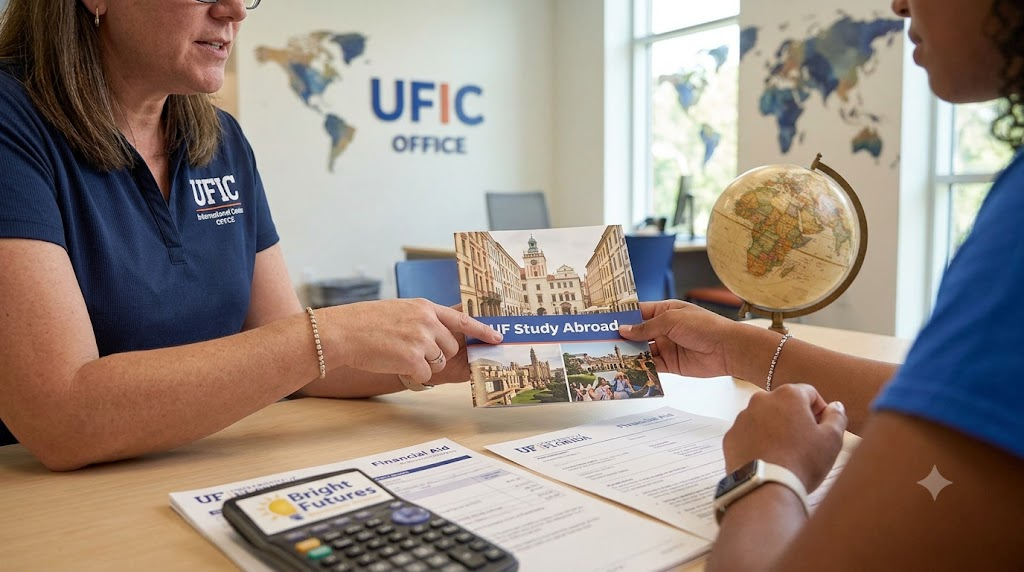
Florida Bright Futures scholarships, Prepaid College Plans, Pell Grants, and federal student loans can generally be applied toward approved UF study abroad courses. Because tuition for exchange programs is billed as standard UF tuition, Bright Futures pays out at the exact same rate per credit hour as it would on campus.
Institutional and External Scholarships
The UF International Center and partner organizations offer dedicated funding pools:
- UFIC Scholarships: Merit and need-based awards offered every semester, including the Bredahl Scholarship and Passport to the World Scholarship.
- Departmental Funding: Colleges like Warrington College of Business and CALS administer internal travel grants for their students.
- Benjamin A. Gilman International Scholarship: A federal award offering up to $5,000 for Pell Grant recipients participating in study abroad programs.
- Boren Awards & Critical Language Scholarships: Government-funded opportunities for students studying critical languages in strategic world regions.
Step-by-Step Roadmap to Apply for UF Study Abroad
Planning your international experience should begin 6 to 12 months prior to your intended departure date.
┌────────────────────────────────────────────────────────┐
│               Study Abroad Application Path            │
└───────────────────────────┬────────────────────────────┘
                            │
┌───────────────────────────▼────────────────────────────┐
│ Step 1: Attend an Info Session & Search Programs       │
│ Research options using the UFIC portal.                │
└───────────────────────────┬────────────────────────────┘
                            │
┌───────────────────────────▼────────────────────────────┐
│ Step 2: Meet with an Academic Advisor                  │
│ Map degree requirements and course equivalencies.      │
└───────────────────────────┬────────────────────────────┘
                            │
┌───────────────────────────▼────────────────────────────┐
│ Step 3: Consult a UFIC Study Abroad Advisor            │
│ Discuss logistics, visa requirements, and deadlines.    │
└───────────────────────────┬────────────────────────────┘
                            │
┌───────────────────────────▼────────────────────────────┐
│ Step 4: Submit Online Application & Apply for Funding  │
│ Complete essays, gather recommendations, apply for aid.│
└───────────────────────────┬────────────────────────────┘
                            │
┌───────────────────────────▼────────────────────────────┐
│ Step 5: Attend Pre-Departure Orientation               │
│ Complete safety, health, and travel protocols.         │
└────────────────────────────────────────────────────────┘
- Explore and Research: Visit the UFIC online program search tool to filter opportunities by country, academic term, field of study, and budget.
- Consult Academic Advisors: Review your remaining degree audit with your college advisor to pinpoint which term is best suited for travel and which course requirements can be fulfilled abroad.
- Connect with UFIC Advisors: Schedule a appointment with a dedicated study abroad advisor specializing in your target region to review program costs, visa steps, and housing.
- Submit Application & Financial Forms: Complete the UFIC online application before the term deadline (typically October for Spring/Spring Break; March for Summer/Fall). Apply for scholarships through the Scholarship Universe portal simultaneously.
- Complete Pre-Departure Requirements: Attend mandatory orientation sessions covering health insurance, international safety, and cultural adjustment strategies.
Frequently Asked Questions
1. Can non-UF students participate in UF faculty-led study abroad programs?
Yes, non-UF students, including students from other universities or state colleges, can apply for select UF faculty-led programs. Non-UF applicants must apply as non-degree seeking students, meet the GPA prerequisites, and pay applicable program charges and tuition fees.
2. Is it possible to study abroad during my final semester at UF?
Yes, but it requires careful coordination with your college advising office. Because transfer credits from exchange or affiliate programs can take several weeks to process post-program, graduation clearance might be delayed until transcripts arrive. Faculty-led programs, which grant direct UF credit, avoid transcript processing delays.
3. How does housing work while studying abroad?
Housing arrangements depend on the program structure. Options include university residence halls, private student apartments, local homestays with host families, or program-arranged hotels/hostels. Details are listed on each specific program’s UFIC page.
4. Do I need to know a foreign language to study in a non-English-speaking country?
Not necessarily. Hundreds of uf study abroad programs in countries like Japan, Italy, Germany, or the Netherlands are taught entirely in English. However, taking introductory language courses before or during your trip is encouraged to assist with daily life.
5. What health and safety support is provided while overseas?
All UF students participating in registered study abroad programs are enrolled in international health insurance and travel assistance plans. UFIC monitors global conditions, offers 24/7 emergency contact protocols, and conducts pre-departure safety briefings.
6. Can I work or hold a job while studying abroad?
Visa regulations vary by country. On standard short-term student visas or tourist visas, working is generally prohibited. On semester or year-long student visas in specific countries (such as the UK or Australia), part-time work on or off campus may be permitted up to a capped number of hours per week.
7. What happens if my passport expires soon?
Your passport must be valid for at least six months beyond your scheduled return date to the United States. If your passport expires prior to that window, you must renew it well before applying for foreign entry visas.
8. Can I travel independently to other countries during my study abroad program?
Yes, provided it does not conflict with scheduled classes, mandatory field trips, or program obligations. Students must log independent personal travel itineraries in the UFIC registry for safety and emergency contact tracking.
9. Are accommodation services available for students with disabilities abroad?
UFIC collaborates closely with the UF Disability Resource Center (DRC) to arrange reasonable accommodations abroad. Students should notify advisors early in the planning process to assess local accessibility infrastructure and arrange necessary academic or physical modifications.
10. How do study abroad grades affect honors status or graduate school applications?
Direct UF faculty-led grades affect your cumulative UF GPA directly. For exchange and affiliate programs, grades appear as transfer credits on your UF transcript. While transfer grades do not alter your internal UF GPA, graduate and professional schools (like law or medical school) will request original transcripts from host institutions and factor those grades into their independent admissions evaluations.
also read: https://cherishsstudy.com/best-study-abroad-programs/
Conclusion
Participating in uf study abroad programs offers a vital bridge between classroom theory and real-world global perspectives. By offering a range of options—from brief summer faculty-led trips to immersive year-long university exchanges—the University of Florida equips students to expand their academic scope, build international networks, and develop career-ready skills.

With financial aid portability and dedicated UFIC scholarship support, international education is accessible to every Gator willing to take the leap. Start exploring options early, meet with your advisors, and chart your path toward becoming a truly global citizen.