Affordable Study Abroad Programs: Your Ultimate Guide to Global Education on a Budget
Studying abroad is a dream for millions of students worldwide. Immersing yourself in a new culture, gaining a global perspective, and earning an international qualification can completely transform your personal and professional future. However, a major myth often stops students in their tracks: the belief that studying overseas is exclusively for the wealthy. The truth is that affordable study abroad programs are widely available if you know where to look, how to plan, and which destinations to choose.
Exploring the world does not have to drain your savings account or leave you drowning in insurmountable student debt. With strategic planning, choosing cost-effective countries, leveraging scholarships, and managing your daily expenses wisely, you can earn your degree or complete an exchange semester without financial stress. This comprehensive guide explores everything you need to know about finding, funding, and succeeding in budget-friendly international education.
Why Study Abroad is Attainable for Everyone
The global education landscape has evolved significantly over the past decade. Universities and governments around the world recognize the immense value of international diversity on their campuses. As a result, many nations have implemented tuition-free or heavily subsidized higher education models that apply equally to international students.

When people think of studying abroad, expensive cities like London, New York, or Sydney often come to mind. While those locations certainly carry a high price tag, they represent only a tiny fraction of global academic opportunities. Excellent institutions offering world-class instruction can be found in vibrant, culturally rich countries where the cost of living is a fraction of Western Europe or North America.
Key Benefits of Choosing Budget-Friendly Options
- Reduced Financial Stress: Minimizing your upfront debt allows you to focus entirely on your academics and cultural integration rather than worrying about monthly bills.
- Smart Resource Management: Learning to live on a budget in a foreign country builds invaluable life skills, including financial literacy and adaptability.
- Greater Cultural Immersion: Affordable study destinations are often less saturated with expatriate bubbles, forcing you to engage more deeply with the local language and community.
Top Budget-Friendly Destinations for International Students
Choosing the right country is the single most impactful decision you will make when searching for affordable study abroad programs. Tuition fees, visa requirements, and living expenses vary wildly across the globe. Below is a detailed breakdown of top destinations known for high-quality, low-cost education.
Germany: High-Quality Education with Minimal Tuition
Germany remains a global favorite for international students due to its exceptional academic reputation and remarkably low costs. Most public universities in Germany charge little to no tuition fees for undergraduate and consecutive master’s programs, regardless of your nationality (with the exception of the state of Baden-Württemberg, which charges a modest fee).

- Tuition Fees: Typically €0 to €300 per semester (mostly covering administrative costs and public transport tickets).
- Living Costs: Approximately €850 to €1,000 per month, depending on the city (Berlin, Munich, and Frankfurt are higher; cities like Leipzig or Dortmund are much cheaper).
- Part-Time Work: International students are legally permitted to work 120 full days or 240 half days per year.
Taiwan: Emerging Hub for Innovation and Affordability
Taiwan has rapidly grown into a preferred destination for international scholars, particularly in fields like engineering, technology, Mandarin language studies, and business. Taiwanese universities offer globally recognized degrees at a fraction of the cost found in English-speaking Western nations.
- Tuition Fees: Generally ranges from $2,000 to $4,000 USD per year for undergraduate programs.
- Living Costs: Roughly $400 to $600 USD per month, covering housing, food, and local transit.
- Scholarships: The Taiwanese government and individual universities offer generous scholarship packages that often include complete tuition waivers and monthly stipends.
Argentina: Affordable Living and Rich Culture in South America
For students seeking an immersive cultural experience in a vibrant Spanish-speaking environment, Argentina offers incredible value. Public universities in Argentina are free for both domestic and international students under national legislation, making it an extraordinary option for budget-conscious learners.
- Tuition Fees: Free at public universities, though some private institutions charge low to moderate fees.
- Living Costs: Very affordable, often ranging from $300 to $500 USD per month due to favorable exchange rates.
- Language & Lifestyle: Ideal for students looking to become fluent in Spanish while experiencing world-renowned arts, food, and landscapes.
Comparison of Budget Study Destinations
To help you visualize your options at a glance, the following table compares key financial factors across popular budget-friendly study regions:
| Country | Average Annual Tuition (USD) | Estimated Monthly Living Costs (USD) | Part-Time Work Allowed | Popular Fields of Study |
| Germany | $0 – $700 | $850 – $1,000 | Yes (120 full days/year) | Engineering, Computer Science, Business |
| Taiwan | $2,000 – $4,000 | $400 – $600 | Yes (20 hours/week) | Technology, Mandarin, Public Health |
| Argentina | Free (Public Unis) | $300 – $500 | Yes (Unlimited hours for students) | Humanities, Spanish, Agriculture, Arts |
| Malaysia | $3,500 – $7,000 | $400 – $700 | Yes (20 hours/week during semester) | Business, IT, Hospitality |
Actionable Strategies to Lower Your Study Abroad Costs
Finding a low-tuition university is only the first step. To ensure your journey remains truly affordable, you must implement smart financial strategies before departure and throughout your stay.
1. Apply for Government and Institutional Scholarships
Countless funding bodies exist solely to support international mobility. Look into prestigious programs such as the DAAD scholarships in Germany, Taiwan Government Scholarships, or Erasmus+ grants if you are studying within participating European frameworks. Many universities also offer merit-based and need-based tuition waivers automatically upon application.
2. Choose Accommodation Wisely
University-affiliated residence halls (dormitories) are almost always significantly cheaper than private rental apartments. If dorms are unavailable, consider sharing an apartment with fellow students to split rent, utility bills, and internet costs. Living slightly outside the city center near a reliable public transit line will also drastically reduce your monthly housing expenses.
3. Master Budget Cooking and Local Markets
Eating out at restaurants daily will quickly destroy even the most well-planned budget. Shop at local neighborhood markets and discount supermarkets, cook your meals in batches, and embrace student discounts available at local cafeterias, museums, and public transport systems.

Step-by-Step Roadmap to Secure Your Program
Embarking on an international education journey requires meticulous organization. Follow this structured timeline to keep your process smooth and stress-free:
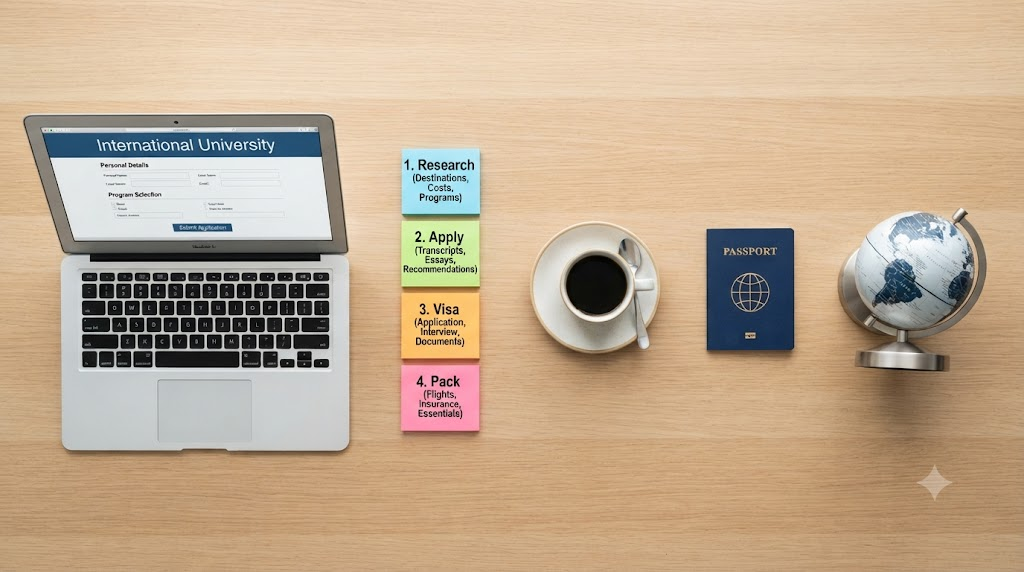
[1. Research & Select] ---> [2. Check Requirements] ---> [3. Secure Funding] ---> [4. Apply & Prepare]
   Identify budget countries      Gather transcripts &         Apply for scholarships      Submit university forms
   and matching universities     language proficiency tests     & prepare savings proof     & book your travel
- 12 to 18 Months Prior: Begin researching universities, degree structures, language proficiency requirements (such as IELTS, TOEFL, or TestDaF), and application deadlines.
- 9 to 12 Months Prior: Take required standardized tests, request academic transcripts and recommendation letters, and submit your scholarship applications.
- 6 to 9 Months Prior: Receive your university acceptance letter, open a blocked bank account or prepare proof of financial means if required for your student visa.
- 3 to 6 Months Prior: Apply for your student visa at the local embassy or consulate, book affordable flights, and secure your initial accommodation.
Frequently Asked Questions
Can I study abroad for free without speaking a foreign language?
Yes. Many universities in non-English speaking countries—such as Germany, Norway, and France—offer entire degree programs, particularly at the master’s level, taught completely in English. However, learning basic phrases of the local language will greatly enrich your daily life and improve part-time job prospects.
Do affordable study abroad programs offer recognized degrees?
Absolutely. Low tuition does not mean low quality. Many budget-friendly institutions rank exceptionally high in global university league tables. The key is to ensure that the university is officially accredited by its respective national ministry of education.
How much savings should I show for a student visa?
Visa offices require proof that you can support yourself without relying on public funds. This amount varies by country; for instance, Germany requires a blocked account containing a government-set annual living cost threshold, whereas other countries may require proof of a few thousand dollars in a personal bank account.
Are exchange programs cheaper than direct enrollment?
If you are currently enrolled at a home university that participates in bilateral exchange agreements or programs like Erasmus, you typically continue paying tuition to your home institution while studying abroad, making it an exceptionally cost-effective route.
Can I work full-time while studying abroad on a budget?
Most student visas place legal limits on working hours (typically 20 hours per week during the academic semester) to ensure your primary focus remains on your studies. However, students are usually permitted to work full-time during official university holiday breaks.
What are the hidden costs of studying abroad to watch out for?
Beyond tuition and rent, students often forget to budget for mandatory health insurance, visa application fees, textbook purchases, initial flight tickets, and local security deposits for housing. Always keep a financial buffer of at least 10% to 15% for emergencies.
How can I find housing safely from another country?
Stick to official university housing offices, verified student housing portals, or recommendations from university alumni groups. Never wire money to private landlords online without a signed contract or a trusted verification process to avoid rental scams.
Is health insurance mandatory for international students?
Yes. Almost every country requires proof of valid health insurance before granting a student visa. Some countries allow you to use your home country’s international coverage, while others require you to enroll in the local public health system or purchase a designated student policy.
Can I stay and work in the country after graduation?
Many budget-friendly study destinations offer generous post-study work pathways. For example, Germany offers an 18-month job-seeker visa for graduates, and Taiwan allows international graduates to apply for extensions to find employment, helping you transition your studies into an international career.
Are community colleges or vocational programs viable budget options?
Yes. In countries like Canada, Germany, and Australia, technical colleges and vocational institutes offer lower tuition rates, shorter program durations, and high employment rates in specialized trade and technical sectors.
also read: https://cherishsstudy.com/utk-study-abroad-programs/
Conclusion
Securing an international education does not require a fortune. By looking beyond traditional, high-cost destinations and focusing on affordable study abroad programs, you open the door to world-class learning, lifelong cultural insights, and global career opportunities. Through careful planning, choosing budget-friendly nations like Germany, Taiwan, or Argentina, and making the most of scholarships and part-time work, you can turn your dream of studying overseas into a remarkable, financially sustainable reality. Take the first step today, research your options, and begin your journey toward a borderless future.