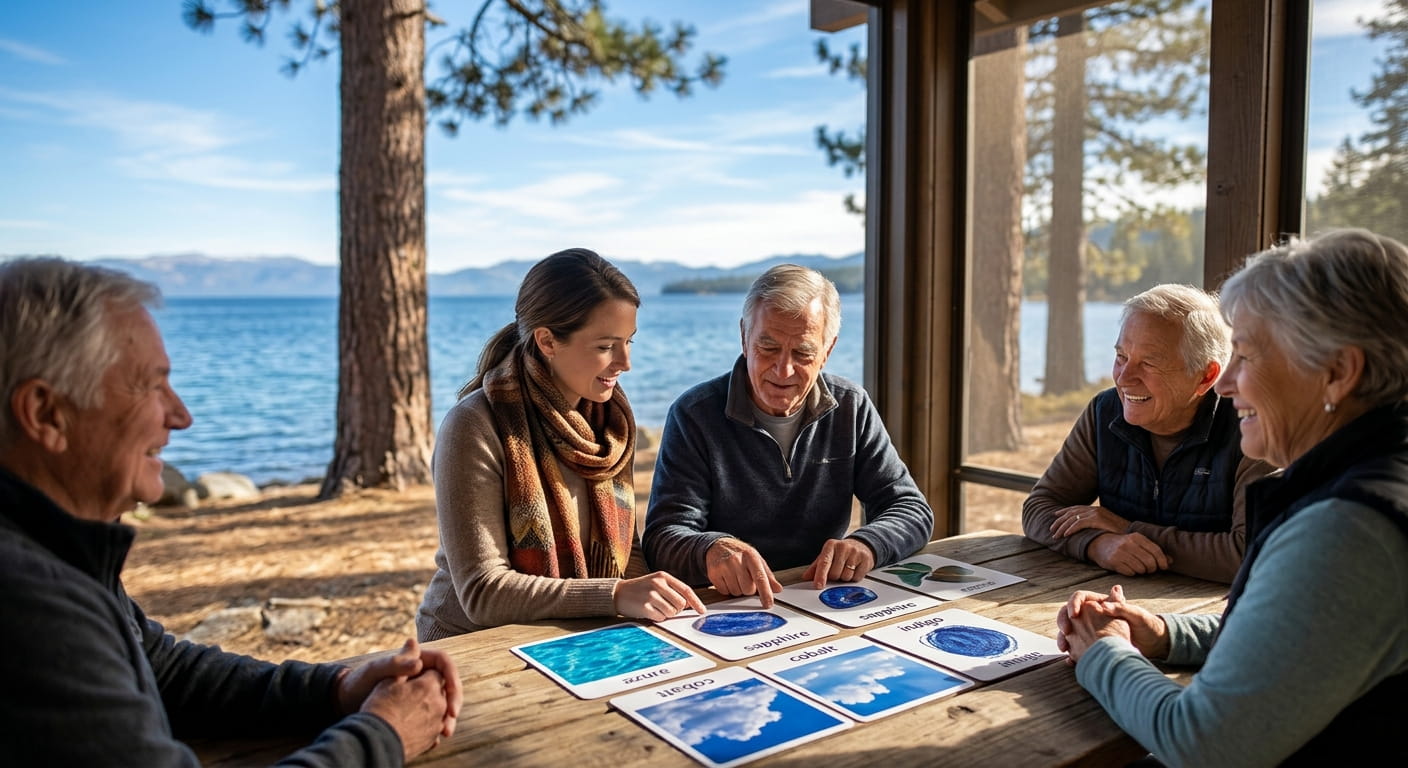
Synonyms for Blue: 100 Better Words to Use
If you want your writing to sound clearer, more varied, and more professional, the word “blue” can quickly become repetitive. It can describe a color, a mood, a cold feeling, or even a risqué joke, and using one word for all of them makes your writing feel flat.
In this guide, you’ll find 100 natural alternatives to “blue” that real writers use, including color shades, emotional words, and descriptive options. Each word comes with a simple meaning and two examples, so you can use it in essays, blogs, stories, and everyday conversation.
Light Blues
Azure
Meaning:
Bright, clear sky blue.
Examples:
The azure sky stretched above us.
She wore an azure scarf.
Cerulean
Meaning:
Deep sky blue.
Examples:
The cerulean sea sparkled.
He painted the wall cerulean.
Powder blue
Meaning:
Soft, pale blue.
Examples:
The nursery was powder blue.
She chose a powder blue dress.
Baby blue
Meaning:
Very light, gentle blue.
Examples:
The baby wore a baby blue hat.
They bought baby blue curtains.
Sky blue
Meaning:
The color of a clear sky.
Examples:
The car was sky blue.
He wore a sky blue shirt.
Pale blue
Meaning:
Blue with very little color.
Examples:
Her eyes were pale blue.
The pale blue walls felt calm.
Ice blue
Meaning:
Light, cool blue like ice.
Examples:
The ice blue lights looked magical.
She painted her nails ice blue.
Periwinkle
Meaning:
Soft blue with a hint of purple.
Examples:
The periwinkle flowers bloomed early.
She wore a periwinkle sweater.
Cornflower
Meaning:
Medium blue like the cornflower plant.
Examples:
The cornflower ribbon looked lovely.
He picked a cornflower tie.
Light blue
Meaning:
A pale shade of blue.
Examples:
The light blue jacket suited him.
We painted the room light blue.
Deep Blues
Navy
Meaning:
Very dark blue.
Examples:
He wore a navy suit.
The navy uniform looked sharp.
Indigo
Meaning:
Deep blue with a purple tint.
Examples:
The indigo sky signaled night.
She dyed the cloth indigo.
Sapphire
Meaning:
Rich, bright, deep blue.
Examples:
The sapphire ring sparkled.
They sailed on sapphire waters.
Cobalt
Meaning:
Strong, vivid blue.
Examples:
The cobalt vase stood out.
She painted the door cobalt.
Ultramarine
Meaning:
Intense deep blue.
Examples:
The artist used ultramarine paint.
The ultramarine sea looked endless.
Midnight blue
Meaning:
Very dark blue like the night sky.
Examples:
She wore a midnight blue gown.
The midnight blue cover looked elegant.
Royal blue
Meaning:
Rich, bright, deep blue.
Examples:
The team wore royal blue jerseys.
He chose a royal blue tie.
Denim
Meaning:
Blue like jeans fabric.
Examples:
She wore a denim jacket.
The denim color faded over time.
Ink blue
Meaning:
Dark blue like ink.
Examples:
He wrote in ink blue pen.
The ink blue cover looked formal.
Dark blue
Meaning:
A deep shade of blue.
Examples:
The dark blue car looked classy.
She bought a dark blue bag.
Green-Blues
Teal
Meaning:
Blue with a hint of green.
Examples:
The teal sofa brightened the room.
She wore a teal dress.
Turquoise
Meaning:
Bright blue-green.
Examples:
The turquoise water looked inviting.
He gave her a turquoise necklace.
Cyan
Meaning:
Bright greenish blue.
Examples:
The screen showed cyan text.
Printers use cyan ink.
Aqua
Meaning:
Light blue-green like water.
Examples:
The aqua tiles shone in the pool.
She painted the shelf aqua.
Aquamarine
Meaning:
Pale blue-green like seawater.
Examples:
The aquamarine stone looked rare.
The sea turned aquamarine at noon.
Peacock
Meaning:
Rich blue-green like a peacock’s feathers.
Examples:
The peacock curtains looked royal.
She wore a peacock blue gown.
Seafoam
Meaning:
Soft, pale green-blue.
Examples:
The seafoam walls felt calm.
He bought a seafoam bike.
Lagoon
Meaning:
Clear blue-green like shallow sea water.
Examples:
The lagoon shade suited the room.
She chose a lagoon swimsuit.
Glaucous
Meaning:
Pale gray-blue or green-blue.
Examples:
The glaucous leaves looked silvery.
A glaucous mist covered the hills.
Electric blue
Meaning:
Bright, shining blue.
Examples:
The electric blue lights flashed.
He drove an electric blue car.
Gray and Muted Blues
Slate
Meaning:
Blue-gray like stone.
Examples:
The slate roof looked modern.
She painted the wall slate.
Steel blue
Meaning:
Gray-blue like metal.
Examples:
The steel blue car looked sleek.
He wore a steel blue shirt.
Gunmetal
Meaning:
Dark blue-gray.
Examples:
The gunmetal phone looked stylish.
The sky turned gunmetal before the storm.
Smoky blue
Meaning:
Soft blue with gray.
Examples:
The smoky blue sofa felt cozy.
She loved the smoky blue tone.
Dusty blue
Meaning:
Soft, faded blue.
Examples:
The dusty blue curtains looked vintage.
They chose dusty blue for the wedding.
Stormy
Meaning:
Dark gray-blue like storm clouds.
Examples:
The stormy sky worried the sailors.
She had stormy eyes.
Leaden
Meaning:
Dull blue-gray like lead.
Examples:
The leaden sky hung low.
A leaden sea stretched ahead.
Ashen
Meaning:
Pale blue-gray.
Examples:
His ashen face showed fear.
The ashen light faded fast.
Bluish-gray
Meaning:
Gray with a hint of blue.
Examples:
The bluish-gray walls looked calm.
The cat had bluish-gray fur.
Silvery
Meaning:
Light, shining gray-blue.
Examples:
The silvery light covered the lake.
She wore a silvery blue scarf.
Sad and Low Feelings
Sad
Meaning:
Feeling unhappy.
Examples:
She felt sad after the news.
He gave a sad smile.
Down
Meaning:
Low in mood.
Examples:
He felt down all week.
Rainy days make me feel down.
Gloomy
Meaning:
Dark and sad in mood.
Examples:
The gloomy mood spread through the room.
He looked gloomy after the loss.
Melancholy
Meaning:
Deep, quiet sadness.
Examples:
The melancholy music made her cry.
He felt melancholy at sunset.
Depressed
Meaning:
Very low and without energy.
Examples:
He felt depressed after losing his job.
She sounded depressed on the phone.
Glum
Meaning:
Sad and silent.
Examples:
The glum team left the field.
He sat glum at the table.
Downcast
Meaning:
Sad and looking down.
Examples:
She walked home downcast.
His downcast eyes said everything.
Dejected
Meaning:
Sad after a disappointment.
Examples:
The dejected player left the pitch.
She felt dejected after the result.
Mournful
Meaning:
Full of sorrow.
Examples:
The mournful song filled the hall.
He gave a mournful sigh.
Sorrowful
Meaning:
Feeling deep sadness.
Examples:
The sorrowful crowd stood in silence.
She gave a sorrowful look.
Unhappy and Heavy-Hearted
Unhappy
Meaning:
Not feeling joy.
Examples:
He was unhappy with the result.
The unhappy child cried.
Miserable
Meaning:
Very unhappy.
Examples:
She felt miserable in the rain.
They had a miserable trip.
Forlorn
Meaning:
Sad and lonely.
Examples:
The forlorn dog waited at the gate.
She looked forlorn at the station.
Despondent
Meaning:
Having lost hope.
Examples:
He grew despondent after many failures.
The despondent team gave up.
Heartbroken
Meaning:
Deeply hurt by loss.
Examples:
She was heartbroken by the news.
The heartbroken fans cried.
Woeful
Meaning:
Full of sadness or misfortune.
Examples:
He told a woeful story.
The team gave a woeful performance.
Dismal
Meaning:
Sad and without hope.
Examples:
The dismal news upset everyone.
It was a dismal day.
Somber
Meaning:
Serious and sad.
Examples:
The somber mood filled the church.
He gave a somber speech.
Wistful
Meaning:
Sad with a longing for the past.
Examples:
She gave a wistful smile.
He felt wistful about childhood.
Low
Meaning:
Not in good spirits.
Examples:
She felt low after the argument.
His mood was low all day.
Cold and Chilly
Frosty
Meaning:
Very cold, covered in frost.
Examples:
The frosty morning froze the pond.
She gave him a frosty look.
Icy
Meaning:
Very cold like ice.
Examples:
The icy wind hurt our faces.
He gave an icy reply.
Chilly
Meaning:
Unpleasantly cold.
Examples:
The chilly night made us shiver.
It was a chilly evening.
Frigid
Meaning:
Extremely cold.
Examples:
The frigid air froze the lake.
They crossed the frigid river.
Wintry
Meaning:
Cold like winter.
Examples:
The wintry weather lasted for weeks.
A wintry breeze shook the trees.
Polar
Meaning:
Very cold like the poles.
Examples:
Polar winds swept the coast.
They faced polar temperatures.
Glacial
Meaning:
Extremely cold like a glacier.
Examples:
The glacial water shocked us.
He gave a glacial stare.
Arctic
Meaning:
Very cold, from the far north.
Examples:
Arctic air moved south.
The arctic night felt endless.
Frozen
Meaning:
Turned to ice or very cold.
Examples:
The frozen lake looked silent.
My fingers felt frozen.
Cool
Meaning:
Slightly cold in a pleasant way.
Examples:
The cool breeze felt refreshing.
She enjoyed the cool evening.
Sky and Sea
Celestial
Meaning:
Belonging to the sky.
Examples:
The celestial glow lit the hills.
They studied celestial stars.
Heavenly
Meaning:
Beautiful like the sky.
Examples:
The heavenly view amazed us.
She wore a heavenly shade of blue.
Oceanic
Meaning:
Relating to the ocean.
Examples:
The oceanic breeze cooled the beach.
They studied oceanic life.
Marine
Meaning:
Relating to the sea.
Examples:
Marine animals fill the bay.
The marine light looked calm.
Maritime
Meaning:
Connected with the sea.
Examples:
The maritime town smelled of salt.
He studied maritime history.
Nautical
Meaning:
Relating to ships and sailing.
Examples:
The nautical theme suited the cafe.
She wore a nautical stripe shirt.
Aquatic
Meaning:
Relating to water.
Examples:
Aquatic plants filled the pond.
The aquatic color calmed us.
Watery
Meaning:
Like water in look or feel.
Examples:
The watery light filled the room.
A watery blue shone in her eyes.
Tidal
Meaning:
Relating to the tides of the sea.
Examples:
The tidal pool sparkled in the sun.
They watched the tidal waves roll in.
Deep-sea
Meaning:
Coming from the deep ocean.
Examples:
The deep-sea shade looked mysterious.
He painted a deep-sea scene.
Risqué and Off-Color
Risqué
Meaning:
Slightly shocking or improper.
Examples:
He told a risqué joke.
The risqué film drew attention.
Racy
Meaning:
Lively and slightly improper.
Examples:
The racy novel became a hit.
She wrote a racy comedy.
Indecent
Meaning:
Not suitable or polite.
Examples:
The indecent remark shocked guests.
They banned the indecent show.
Vulgar
Meaning:
Rude and lacking taste.
Examples:
His vulgar joke upset the room.
She disliked vulgar language.
Crude
Meaning:
Rough and rude.
Examples:
The crude comment embarrassed everyone.
He told a crude story.
Bawdy
Meaning:
Funny in a rude, cheerful way.
Examples:
The bawdy song made them laugh.
He wrote bawdy comedies.
Lewd
Meaning:
Rude in a sexual way.
Examples:
The lewd remark was inappropriate.
He was warned for lewd behavior.
Off-color
Meaning:
Slightly improper or in poor taste.
Examples:
His off-color joke fell flat.
She ignored the off-color remark.
Ribald
Meaning:
Funny in a rough, rude way.
Examples:
The ribald humor split the crowd.
He loved ribald stories.
Salacious
Meaning:
Showing too much interest in sex.
Examples:
The salacious gossip spread fast.
She refused to read salacious news.
Bleak and Dreary
Bleak
Meaning:
Cold, empty, and without hope.
Examples:
The bleak landscape stretched for miles.
The future looked bleak.
Grim
Meaning:
Serious and without cheer.
Examples:
The grim news shocked us.
He wore a grim expression.
Dreary
Meaning:
Dull and depressing.
Examples:
The dreary weather lasted all week.
It was a dreary Monday.
Cheerless
Meaning:
Without joy or comfort.
Examples:
The cheerless room felt cold.
He lived a cheerless life.
Joyless
Meaning:
Without happiness.
Examples:
The joyless meeting dragged on.
She gave a joyless laugh.
Doleful
Meaning:
Sad and mournful.
Examples:
The doleful bell rang slowly.
He gave a doleful look.
Morose
Meaning:
Gloomy and bad-tempered.
Examples:
The morose man sat alone.
He grew morose after the loss.
Sullen
Meaning:
Quiet, sad, and bad-tempered.
Examples:
The sullen boy refused to talk.
She gave a sullen glare.
Hopeless
Meaning:
Without any hope.
Examples:
The situation felt hopeless.
He gave a hopeless sigh.
Desolate
Meaning:
Empty, lonely, and sad.
Examples:
The desolate town was silent.
She felt desolate without him.
Conclusion
Learning synonyms for “blue” can greatly improve your writing and speaking. When you choose a precise word instead of repeating “blue,” your sentences become clearer, more vivid, and more interesting.
Students can write better essays. Bloggers can create more engaging content. And everyday English users can express themselves with more confidence.
Start practicing these words in your emails, essays, and daily conversations. The more you use them, the more natural they will feel.