The Ultimate Guide to the Best Study Abroad Programs in 2026: Transform Your Future
Choosing to pursue your higher education in a foreign country is one of the most impactful decisions you will ever make. It is far more than an academic upgrade; it is a full-scale life reset that challenges your independence, broadens your worldview, and significantly accelerates your career trajectory. As global job markets evolve, having international experience on your resume stands out as a massive competitive advantage.
also read:https://cherishsstudy.com/summer-study-abroad-programs/
Navigating the massive ocean of global universities, credit transfers, visa pathways, and language requirements can feel incredibly overwhelming. This comprehensive guide breaks down the absolute best study abroad programs available today, comparing top destinations, highlighting structural options, and outlining the essential steps to turn your international academic dreams into a reality.
1. Defining the Core Structures of International Education
Before packing your bags, it is essential to understand that international education does not follow a single, standard format. Programs vary dramatically based on duration, academic depth, and the level of institutional support provided. Finding the right structural fit depends entirely on your personal budget, major requirements, and comfort level with independent living.

Third-Party Provider Programs
For students seeking a highly supported transition, third-party providers like CIEE, AIFS, and CEA CAPA are excellent choices. These organizations handle the logistics of your journey, including housing coordination, local excursions, health insurance, and visa guidance. While provider programs are typically more expensive due to these built-in administrative services, they offer a secure safety net for first-time travelers.
Direct Enrollment Partnerships
If you prefer complete independence and a highly immersive experience, direct enrollment is a stellar path. In this setup, your home university maintains a reciprocal exchange agreement with a foreign institution. You pay standard tuition fees to your home school while attending classes abroad alongside local residents. This structure forces you to integrate deeply into the host country’s student culture, though it requires you to manage your own housing and local bureaucracy.
Faculty-Led Short-Term Semesters
Students who cannot commit to an entire semester due to strict academic timelines or part-time job obligations often thrive in short-term, faculty-led programs. These intensive courses usually run for two to six weeks during summer or winter breaks. Led by professors from your home campus, these programs focus heavily on field-specific experiential learning, allowing you to earn credits rapidly without disrupting your long-term graduation schedule.
2. Deep Dive Into the Top Global Destinations
The ideal destination balances high academic standards with an affordable cost of living and favorable post-graduation work opportunities. Global dynamics have shifted student preferences toward countries that offer clear pathways to employment and practical field experience. Let’s explore the leading regions capturing international student interest today.
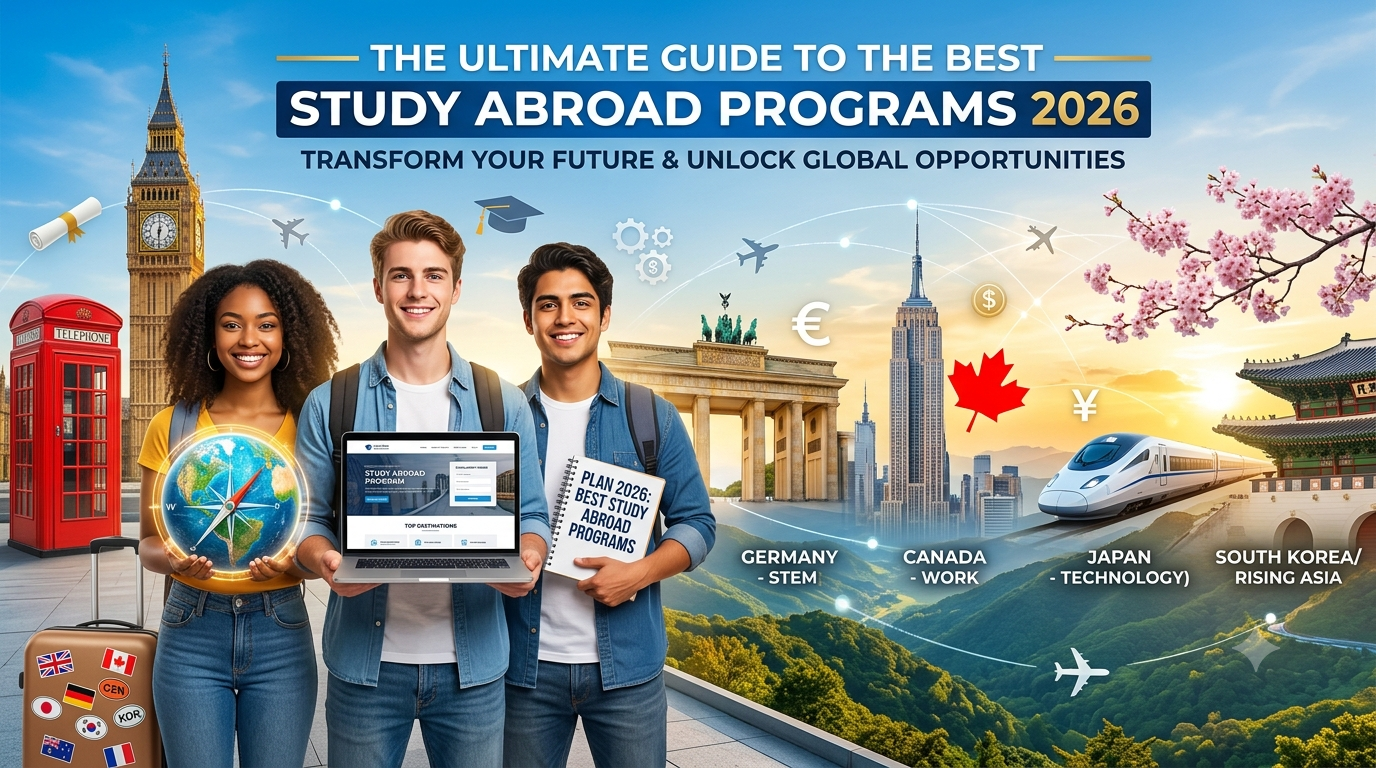
Germany: The World-Class, Tuition-Free Frontier
Germany has firmly established itself as a premier destination for international scholars, particularly those majoring in science, technology, engineering, and mathematics (STEM) fields. The primary draw is the public university system: most public institutions charge zero tuition fees for both domestic and international students, requiring only a small nominal semester contribution for administrative costs and public transit passes.
Top-tier institutions like the Technical University of Munich and Heidelberg University offer elite research facilities and direct industrial connections with global giants like Siemens and BMW. While English-taught master’s degrees are widely available, learning functional German will vastly improve your daily life and part-time job prospects.
The United Kingdom: Elite Academic Prestige
The United Kingdom remains an academic powerhouse, driven by the global reputation of legacy institutions such as Oxford, Cambridge, and Imperial College London. A massive advantage of the British system is speed: undergraduate degrees typically wrap up in three years, and master’s programs require just a single year of intensive study. This accelerated structure saves you an entire year of living expenses. Furthermore, the UK’s Graduate Visa route grants international graduates a two-year window to live and work in the country unconditionally.
also read: https://cherishsstudy.com/summer-study-abroad-programs/
Canada: The Streamlined Residency Pathway
Canada continues to dominate student interest due to its exceptionally welcoming multicultural environment and highly transparent immigration frameworks. Universities such as the University of Toronto, McGill, and UBC are globally revered. The true hallmark of the Canadian approach is the Post-Graduation Work Permit (PGWP) program, which allows students to gain valuable local corporate experience for up to three years after finishing their degree. This experience serves as a direct, structured stepping stone toward earning permanent residency status.
Japan and South Korea: The Rising East Asian Powerhouses
East Asia is experiencing an incredible boom in international student enrollments. South Korea has successfully surpassed its target of attracting hundreds of thousands of foreign scholars, fueled by the global cultural wave and an abundance of new English-taught majors. Meanwhile, Japan’s Ministry of Education is actively raising university enrollment caps to attract top-tier global talent. Both nations offer unmatched safety, highly efficient public infrastructure, and massive industries looking for bilingual graduates.
3. Financial Breakdown: Tuition, Living Costs, and Perks
Understanding the financial reality of studying abroad prevents unexpected budget crunches mid-semester. The overall cost is a combination of institutional tuition fees, mandatory local health insurance, accommodation expenses, and regional living costs.
The table below provides a realistic cost comparison and post-study work visa evaluation for the world’s premier study destinations:
| Country | Average Annual Tuition (USD) | Estimated Monthly Living (USD) | Post-Study Work Visa Window | Primary Structural Advantage |
| Germany | $0 – $3,000 | $900 – $1,200 | 18 Months | Complete exemption from tuition fees. |
| United Kingdom | $18,000 – $40,000 | $1,200 – $1,800 | 2 Years | Fast-track 1-year master’s degrees. |
| Canada | $18,000 – $33,000 | $1,300 – $2,000 | Up to 3 Years | Clear, predictable pathway to PR. |
| Japan | $4,000 – $12,000 | $800 – $1,200 | 1 – 2 Years | High-tech industry internship access. |
| Netherlands | $9,000 – $22,000 | $1,100 – $1,600 | 1 Year (Zoekjaar) | Widespread English-taught curriculums. |
4. Academic Alignment: Matching Your Major with the Right Region
Every country features an academic specialty rooted in its regional economy and historic university funding models. Matching your academic major with the correct geographic destination ensures you gain access to relevant internships, local labs, and industry mentors.
- Engineering & Advanced Robotics: Germany and Japan stand out as the undisputed global champions for engineering disciplines. Their programs blend rigorous theoretical math with mandatory, hands-on industrial internships inside highly automated manufacturing plants.
- Business, Finance & Fintech: The United States, the UK (specifically London), and Singapore offer unparalleled access to global financial hubs. Studying in these corporate epicenters provides direct networking channels with elite accounting firms, venture capital funds, and multinational banks.
- Environmental Science & Sustainability: If your passion lies in renewable energy systems, climate policy, or marine biology, look closely at New Zealand, Australia, and Denmark. These countries lead the world in ecological research initiatives and protect massive natural reserves that serve as active outdoor classrooms.
- Creative Arts, Media & Literature: For students focusing on humanities, creative writing, or design, countries like Ireland, France, and Italy provide incredible historical context and deeply inspiring urban environments.
5. Strategic Step-by-Step Application Timeline
Securing a seat in one of the best study abroad programs requires meticulous planning. Missing a single administrative deadline can delay your departure by an entire academic year.
Follow this logical, step-by-step roadmap to keep your application completely on track:
1.Research and Program Selection:
Identify 3 to 5 target institutions that align with your major, financial boundaries, and language capabilities. Verify credit transfer eligibility with your home university’s academic advisor to guarantee your foreign courses count toward graduation.
2.Standardized Testing and Documentation:
Register for and take mandatory language proficiency exams (such as IELTS or TOEFL) or academic entry tests. Begin drafting your personal statements and secure official letters of recommendation from professors or corporate mentors.
3.Submission of University Applications:
Complete and submit online application portals directly to your chosen foreign institutions. Compile official university transcripts, certified translations, and proof of graduation diplomas.
4.Financial Arrangements and Scholarships:
Upon receiving an official letter of acceptance, apply for university merit scholarships or external government funding (like DAAD or Chevening). If required by your host country (such as Germany), establish a blocked bank account containing your full yearly living expenses to satisfy visa requirements.
5.Student Visa Processing:.
Schedule an in-person interview appointment at the local embassy or consulate of your host nation. Submit your official passport, university acceptance letter, clean criminal record checks, and comprehensive international medical insurance policies.
6. Frequently Asked Questions
1. Can I study abroad if I do not speak the local language fluently?
Yes, absolutely. An immense number of universities worldwide now offer comprehensive degree programs entirely in English, particularly at the master’s degree level. While learning basic local phrases is vital for comfortable daily grocery shopping and building friendships, it is rarely a barrier to academic admission.
2. Are international student loans readily available for these programs?
Many domestic government student loan programs allow you to use your funding at approved international universities. Additionally, private international student lenders provide specialized loans, though these often require a creditworthy co-signer who resides in your home country.
3. How do I guarantee that my international credits will transfer back home?
You must obtain written authorization through a formal “Learning Agreement” from your home university’s academic advisor before you depart. This document officially maps each foreign course code directly to an equivalent requirement in your home curriculum.
4. What exactly is a blocked bank account, and why do I need one?
A blocked account is a specialized, mandatory bank account used by countries like Germany to verify financial self-sufficiency. You deposit your entire estimated living expenses for the year upfront, and the bank releases a set monthly allowance to you, proving to immigration officers that you will not become a financial burden on the state.
5. Am I allowed to work part-time while holding a student visa?
Most major international destinations grant students part-time work rights, typically restricted to 20 hours per week during active academic semesters. This limit is often lifted to full-time hours during official summer and winter university holidays.
6. What is the difference between an exchange program and direct enrollment?
In an exchange program, you pay regular tuition fees to your home school and trade places with a student from a partner university abroad. In a direct enrollment setup, you bypass your home school entirely, applying directly to the foreign university and paying their international tuition rates.
7. Does studying abroad delay my official university graduation date?
Not if you plan carefully. If you choose courses that satisfy your core major requirements and get them pre-approved by your academic department, you will graduate at the exact same time as your peers who stayed on your home campus.
8. How does international health insurance work while I am away?
Many countries require you to enroll in their national public health insurance system as part of the student visa approval process. For countries that do not, you must purchase a private international travel health policy that provides comprehensive local medical coverage and emergency medical evacuation.
9. Can I bring my immediate family dependents with me on a student visa?
Certain countries, like Canada and select European nations, permit full-time international graduate students to sponsor visas for spouses and dependent children. However, this requires you to show significantly higher financial savings to cover their living costs.
10. What happens if I decide to drop out of my study abroad program early?
If you withdraw prematurely, you will likely forfeit your tuition fees for that semester and lose your active student visa status, requiring you to return home immediately. Your academic credits earned up to that point may also be voided depending on institutional policies.
Conclusion
Enrolling in the best study abroad programs is an unmatched investment in your personal and professional growth. By aligning your unique academic goals with the structural benefits, financial realities, and post-study opportunities of destinations like Germany, the UK, or Canada, you set yourself up for life-changing success. Start your research early, stay organized through the application milestones, and prepare to embark on an unforgettable global adventure.