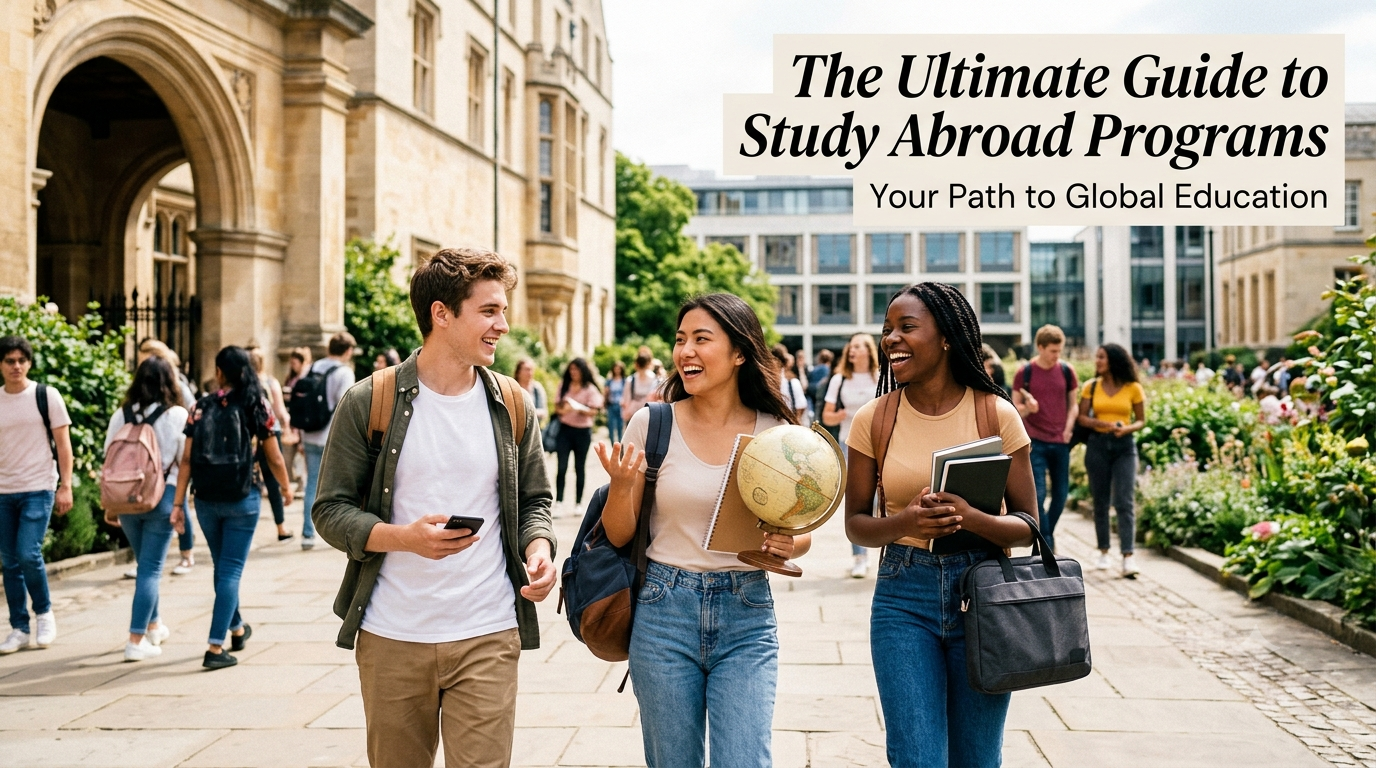
The Ultimate Guide to Study Abroad Programs: Your Path to Global Education
Stepping out of your comfort zone and into a classroom halfway across the world is more than an academic milestone—it is a life-altering adventure. Today, study abroad programs have transitioned from luxury experiences reserved for a select few into vital, strategic steps for building a globally competitive career.
Whether you are looking to spend a brief summer exploring ancient history or aiming to earn a full degree at an international university, understanding the shifting landscape of global education is the key to making an informed choice. This comprehensive guide breaks down everything you need to know to transition seamlessly from dreaming about travel to boarding your flight.

Why Pursue Study Abroad Programs?
In an increasingly interconnected global economy, employers are actively searching for graduates who can navigate cultural nuances, think critically on their feet, and collaborate with diverse teams. Immersive international education acts as a fast-track catalyst for developing these exact traits.
1. The Employability Edge
Academic prestige is no longer the sole metric driving international education. Today’s students use study abroad programs as direct career launchpads. Statistics show that alumni of international programs experience higher graduation rates, faster employment post-graduation, and a greater trajectory toward internationally focused roles. Experiencing foreign business environments, participating in global internships, and learning how other cultures approach industry challenges give you a distinct edge over local candidates.
2. Deep Language and Cultural Immersion
While language-learning apps can help you memorize vocabulary, they cannot teach you the cultural rhythm of a conversation. Living in a country where your target language is spoken forces you to adapt, practice daily, and develop genuine cultural sensitivity. You learn the local idioms, the subtle body language, and the daily social etiquettes that only true integration can provide.
3. Personal Growth and Adaptability
Living independently in a foreign country is the ultimate test of self-reliance. From managing a local budget to navigating public transportation systems in a non-native language, every day challenges you to grow. It builds a profound level of self-confidence and problem-solving maturity that traditional campus life rarely demands.
Types of Study Abroad Programs Available
There is no one-size-fits-all model for international education. Modern pathways are highly flexible, allowing you to choose a program that aligns with your financial budget, academic major, and personal comfort levels.
| Program Type | Typical Duration | Best For | Primary Advantage |
| Short-Term & Summer | 2 to 8 weeks | Busy academic schedules & tight budgets | High impact, low financial risk, fast credits |
| Semester Exchange | 4 to 6 months | Traditional university students | Full campus life immersion and deep local friendships |
| Full Degree Enrollment | 3 to 4 years | Students seeking complete international credentials | Deep academic depth and structured post-study work routes |
| Pathway & Foundation | 1 academic year | Meeting direct entry or language requirements | Lower-risk, structured transition into overseas universities |
Short-Term and Faculty-Led Options
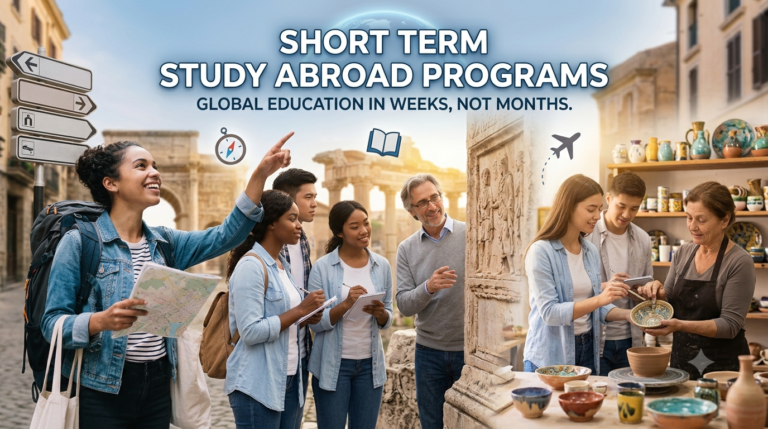
For students who have part-time jobs, campus leadership roles, or tightly packed academic curricula, spending an entire semester away can seem impossible. Short-term study abroad programs—often lasting between two and eight weeks during summer or winter breaks—offer a perfect compromise. Many of these are structured as “faculty-led” programs, where a professor from your home institution guides a small cohort through themed coursework paired with intensive local excursions.
Semester and Academic Year Exchanges
This is the classic study abroad format. You remain enrolled at your home university but spend one or two semesters attending classes at a partner university abroad. The major benefit of this route is that your tuition fees are often paid directly to your home school, meaning your existing scholarships and financial aid packages are highly likely to transfer over.

Transnational and Blended Learning
A rapidly emerging trend is the rise of hybrid study models. These programs allow students to complete a portion of their coursework online before traveling overseas for shorter, highly intensive practical residencies. This drastically reduces the overall living costs associated with moving abroad while still delivering the dynamic international experience and career-focused credentials that modern employers demand.
How to Plan Your Study Abroad Journey
Preparing to study internationally is a process that requires meticulous, early planning. Starting the process roughly 9 to 12 months before your planned departure ensures you have enough time to manage applications, secure funding, and navigate the student visa process.
1.Research and Self-Reflection:
Identify your primary academic, language, and career goals. Do you want to take courses in English, or are you aiming for foreign-language fluency? Consult with your home university’s study abroad office to check which partner programs align with your graduation requirements.
2.Evaluate Your Finances and Apply for Scholarships:
Calculate the total cost of attendance, including tuition, flights, housing, local insurance, and daily food expenses. Research external grants, institutional scholarships, and government financial aid options to compile a clear, realistic budget.
3.Complete Program and University Applications:
Submit your application to your chosen program. Gather your official transcripts, write personal statements, secure letters of recommendation from professors, and complete any required language proficiency exams (like IELTS or TOEFL).
4.Secure Your Student Visa and Housing:
Once accepted, the host university will issue official enrollment documents. Immediately apply for your student visa at the appropriate embassy or consulate. Concurrently, secure housing—whether it is on-campus dorms, shared apartments, or an immersive local homestay program.
5.Pre-Departure Planning and Arrival:
Attend pre-departure orientations, arrange travel insurance, buy your plane tickets, and set up an international banking or card system. Touch down in your host country, attend university orientation, and begin your international chapter!
Navigating the Financial Aspect: Scholarships and Funding
The financial cost is often the single biggest hurdle preventing students from pursuing international education. Fortunately, with a proactive approach, study abroad programs can be incredibly affordable.
Institutional and External Scholarships
Many universities offer dedicated travel grants specifically designed to encourage students to go abroad. Beyond your campus, numerous international organizations and government bodies offer highly competitive, fully funded or partially funded scholarships. For example, programs like the Erasmus+ scheme in Europe or the Gilman Scholarship in the United States offer vital financial lifelines to students demonstrating financial need or academic excellence.
Post-Study and Part-Time Work Opportunities
Many countries allow international students on student visas to work part-time (typically up to 20 hours per week) during the academic term. This is an excellent way to offset your local daily expenses. Additionally, popular destination countries often offer structured post-study work visas, giving you a clear pathway to work full-time in your field of study after completing your degree.
Top Trending Destinations to Keep on Your Radar
While classic destinations like the United Kingdom, Spain, and Italy continue to attract substantial student cohorts, student priorities are shifting. New educational hubs are rising due to their affordability, safety, robust job markets, and welcoming visa policies.
- Singapore & Japan: Celebrated for their exceptional infrastructure, safety, and strong ties to global corporate employers, Asian hubs are rapidly growing choices for students targeting technology, business, and international finance careers.
- Germany & France: With top-tier, public universities offering an increasing selection of English-taught programs at minimal or no tuition cost, Western Europe remains a massive draw for budget-conscious, career-oriented students.
- The Netherlands & Ireland: Famous for their open cultural dynamics, excellent student life, and highly respected higher education institutions, both countries are excellent options for deep academic and cultural immersion.
Frequently Asked Questions
1. Will studying abroad delay my college graduation?
No, not if you plan properly. By working closely with your home university’s academic advisor and study abroad office prior to your departure, you can pre-approve your international courses so that they transfer back as direct equivalents to your degree requirements.
2. Can I study abroad if my GPA is not perfect?
Absolutely. While some highly competitive exchange programs require a GPA of 3.0 or higher, many excellent third-party program providers and host institutions welcome applicants with a GPA of 2.5, prioritizing your personal statement, faculty recommendations, and cultural motivation instead.
3. Are there study abroad programs specifically designed for STEM majors?
Yes. Although humanities and business students traditionally had higher study abroad rates, universities have developed specialized STEM programs. These often feature English-taught laboratory courses, marine biology field studies, or research placements at prestigious foreign laboratories.
4. What happens if I get sick or injured while overseas?
Virtually all international study programs and visa systems require you to hold a comprehensive international health insurance policy. Host universities typically have dedicated campus clinics, student counseling services, and emergency protocols to help you navigate local healthcare systems.
5. Can I study in a country where I do not speak the local language?
Yes. A vast number of universities worldwide offer complete programs taught entirely in English, even in non-English speaking nations. You can take academic courses in English while simultaneously taking introductory language courses to help you navigate everyday life.
6. Can I apply existing government financial aid to an international program?
In many cases, yes. If you are participating in an approved exchange program through your home university, federal or state financial aid packages (such as Pell Grants or Stafford Loans in the US) can often be applied directly to your semester costs.
7. How does student housing work when studying abroad?
Housing options vary by destination and program. You might reside in on-campus student dormitories, rent a shared apartment with other international students, or opt for a local homestay. Homestays are highly recommended for those wanting rapid language acquisition and deep cultural integration.
8. Are short-term programs valued by employers as much as full-year programs?
Yes. Employers value the skills you gain rather than the exact duration. An intensive, 6-week international internship or a targeted project-based summer program where you solved a real-world problem can be just as impressive on your resume as a traditional academic year.
9. What is a “Third-Party Provider” program?
These are specialized organizations (such as CIEE, IES Abroad, or USAC) that partner with universities to manage logistics. They provide comprehensive packages that bundle your tuition, housing, health insurance, local excursions, and 24/7 on-site emergency support into one cohesive fee.
10. Can I study abroad as a graduate student?
Definitely. Many master’s and PhD programs offer short-term global study seminars, international research fellowships, or dual-degree exchange models designed specifically for advanced, specialized coursework.
Conclusion
Embarking on international study abroad programs is an investment in your personal and professional future. While the preparation, paperwork, and financial planning require structured effort, the payoff is unparalleled. You will return home with a deeper understanding of global systems, a robust network of international friends, and the ultimate competitive edge to launch your career in a globalized economy. Take the leap—your global future is waiting!